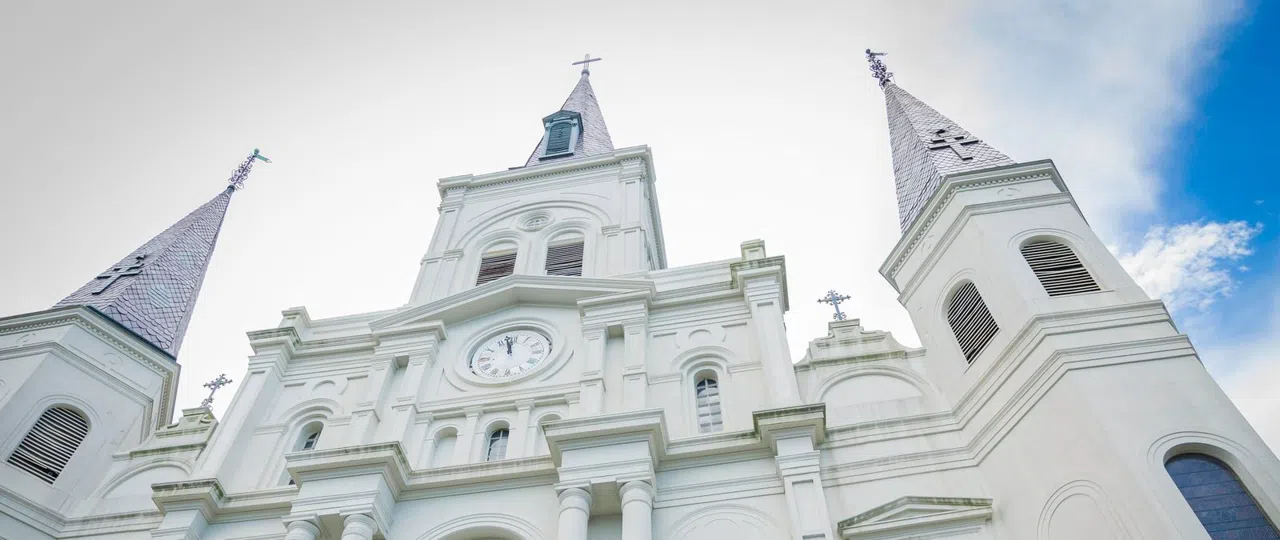

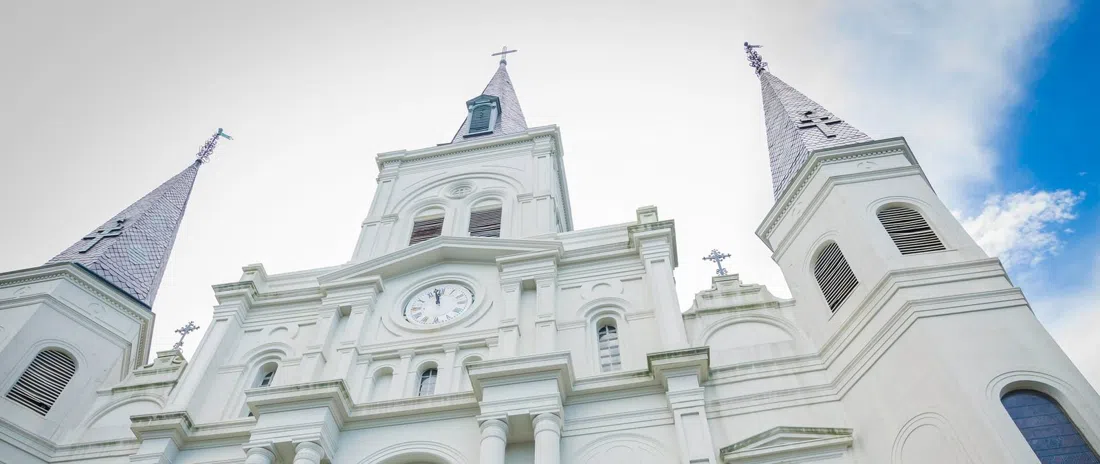
You do not approach St. Louis Cathedral down a grand avenue. You turn out of a narrow French Quarter street, the square opens all at once (flagstones, mule carts, tarot tables, a white facade with three slate spires rising behind it) and everyone around you stops walking at the same moment. In September the city is hot and comparatively thin of visitors, and the best hour of the day is finished before most people have drunk their first coffee.
What you see when you walk in
St. Louis Cathedral (Jackson Square, French Quarter) is a working parish church first and a monument second, and that shapes everything about visiting it. Formally the Cathedral-Basilica of Saint Louis, King of France, it is the third church to stand on this ground, and what you photograph today is essentially a mid-nineteenth-century rebuild of an older one, which is why the facade reads slender and theatrical rather than heavy and medieval. Walk-in visitors go in free, groups included, and there is a donation box near the entrance.
Inside, the first surprise is scale. The nave is narrower than the facade promises, and the eye goes up rather than along: painted vaulting, a mural over the sanctuary, and stained glass that runs through the life of Louis IX of France, the crusading king the church is named for. There is no vast crypt, no treasury, no climbable tower. What you get instead is a quiet, cool, still-used room with side altars and a rack of candles, sitting about twenty steps from one of the busiest tourist squares in the country.
Take the $1 self-guided brochure at the door if you want the windows explained. The official iPad audio tour costs $12.50 and runs longer than most people expect; it suits anyone who wants the building's construction history, and it is unnecessary if you are here for ten minutes and a photograph. Sit in a rear pew for five minutes before you start looking at anything. The building makes more sense once the street noise has dropped out of your ears.
How long it actually takes
Ten to twenty minutes covers the interior for most visitors. With the brochure, budget half an hour. With the audio tour, closer to forty-five minutes, and you will be the last person still standing under the organ loft.
That short interior visit is why the cathedral works best as the anchor of a half day rather than a destination on its own. The natural shape is cathedral, then the museum next door, then the square, then coffee or a drink: three to four hours, all of it within a five-minute walk, none of it requiring a car or a plan more complicated than checking which doors are open on the day.
Doors are the one real variable. The cathedral is open daily 9:30am to 4pm with last entry at 3:45pm, but it closes to visitors without warning for weddings and funerals. That happens often, because this is a parish church in a city that likes ceremony. Check the day's calendar before you cross the square, and have a fallback in your pocket.
Tickets at the door against booking ahead
For the cathedral itself there is nothing to book. You walk in, free, during public hours. The only paid access is the guided tour that runs Monday to Saturday before the public opening, which caps at 20 people, so a larger party has to split into two groups or reserve ahead rather than turning up and hoping.
The wider guided options around the cathedral are a separate question. A guided city or walking tour that takes in the square runs seven days a week and starts from 51 USD per person, with the current season running from 7 September 2026 through to 2 January 2028. Reviews for the leading tour are landing at roughly 2.4 a day, which tells you it is being booked steadily rather than that anything is about to vanish. If you want a specific morning slot in September, book it a few days out; if you are flexible, the door is usually enough.
The best-value guided walk in this cluster is the local one. Friends of the Cabildo French Quarter Walking Tours (office at the 1850 House, Jackson Square) is a non-profit run with the state museum and led by trained volunteers rather than commercial guides. Two-hour general history tours leave the 1850 House at 10:30am and 1:30pm daily and cost $30 for adults, $20 for students from twelve through college, free under twelve, and that price includes 1850 House admission, which makes it the cheapest way to see both. School, corporate and private groups book direct through the office. The specialist thematic walks cap at 15 people, and online booking is the only reliable way to hold a place.
The square is half the experience
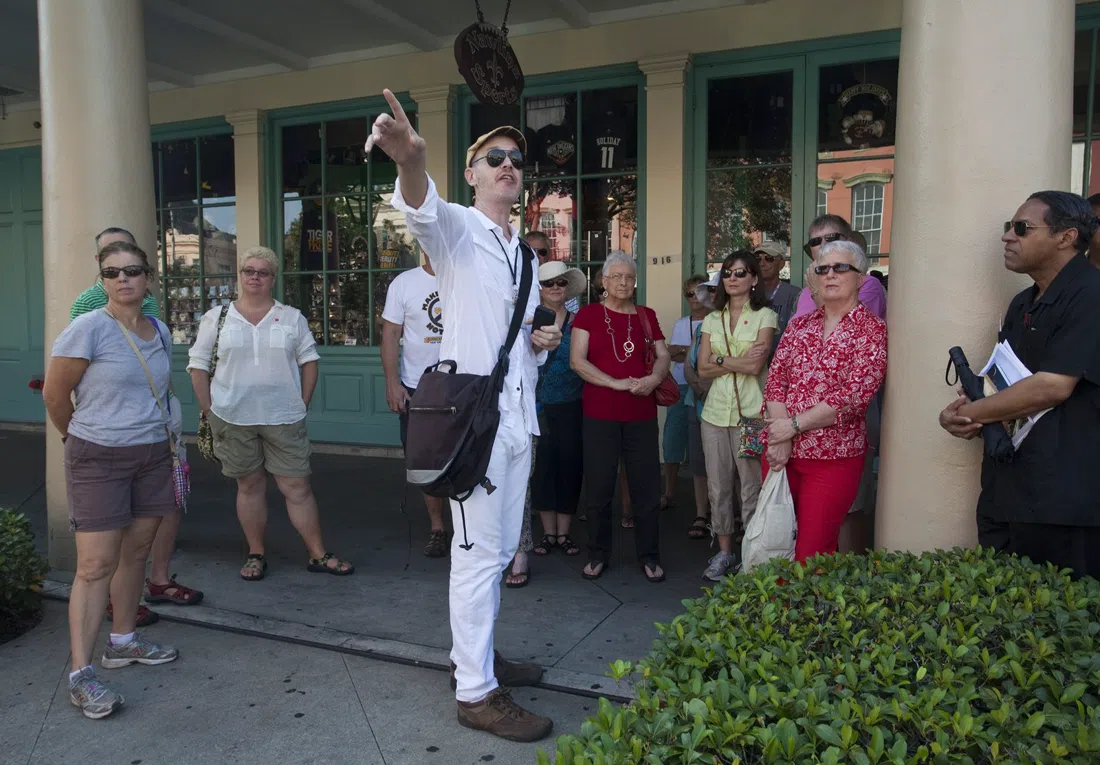
Jackson Square (French Quarter) is the cathedral's front garden and the reason the building photographs the way it does. It costs nothing, there is no door policy, and the inner garden gates open around 8am and shut in the late afternoon, while the pedestrian mall around the railings never closes at all. Painters and portraitists hang work on the outside of the fence; card readers set up along the Chartres Street side. Tour groups assemble on the flagstone perimeter rather than inside the garden, which is worth knowing if you are trying to keep a party of twelve together without blocking anyone.
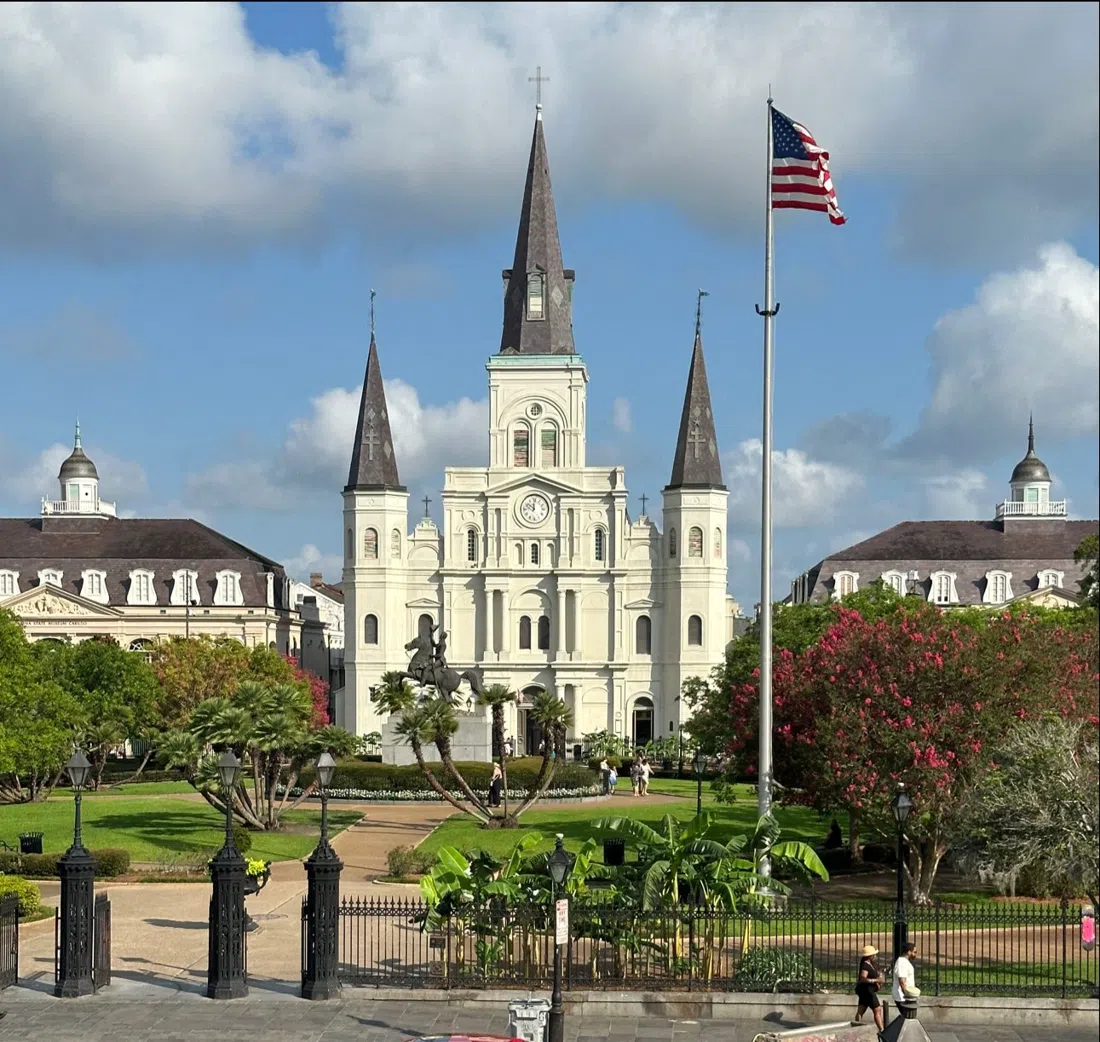
For the photograph everyone wants, cross Decatur to Washington Artillery Park (riverfront side, opposite the square). The elevated plaza is free and open, reached by steps or by ramp, and it is the single place where you can frame the cathedral, both Pontalba buildings and the whole square in one shot. The steps hold an entire coach party for a group picture. Sections are occasionally fenced off for riverfront works, so if one flank is closed, walk along a few metres and shoot from the other.
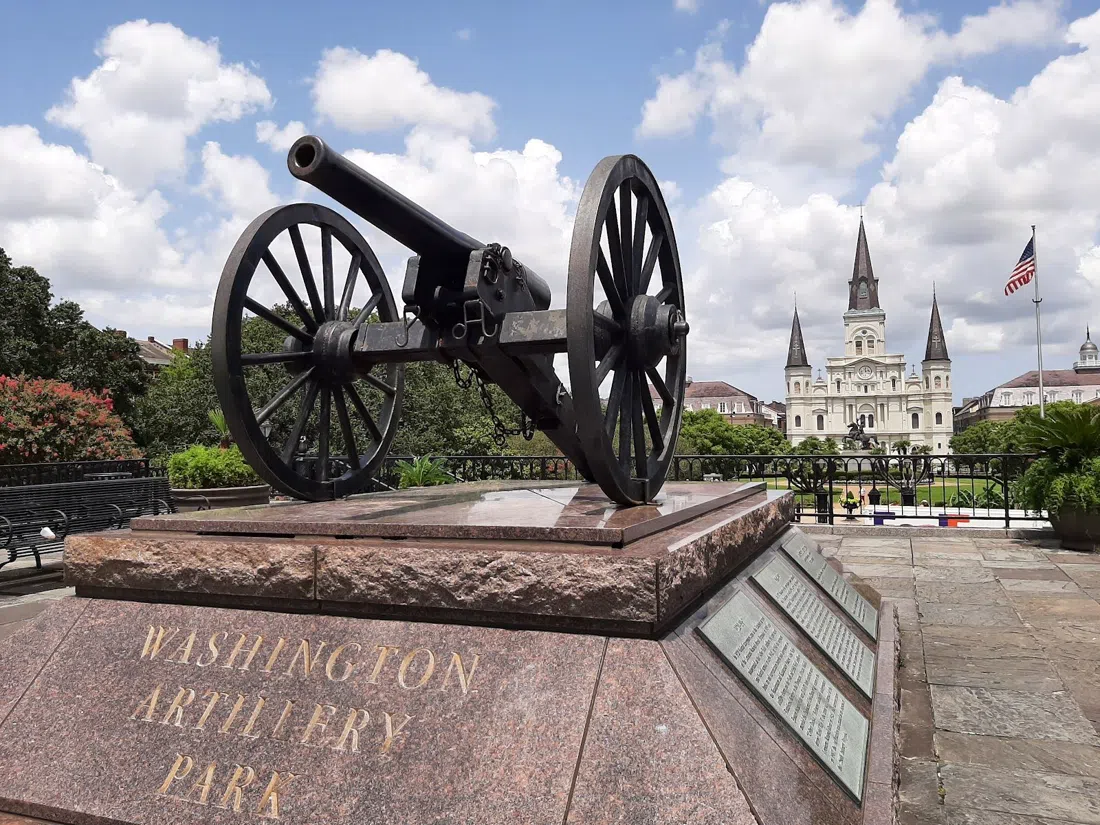
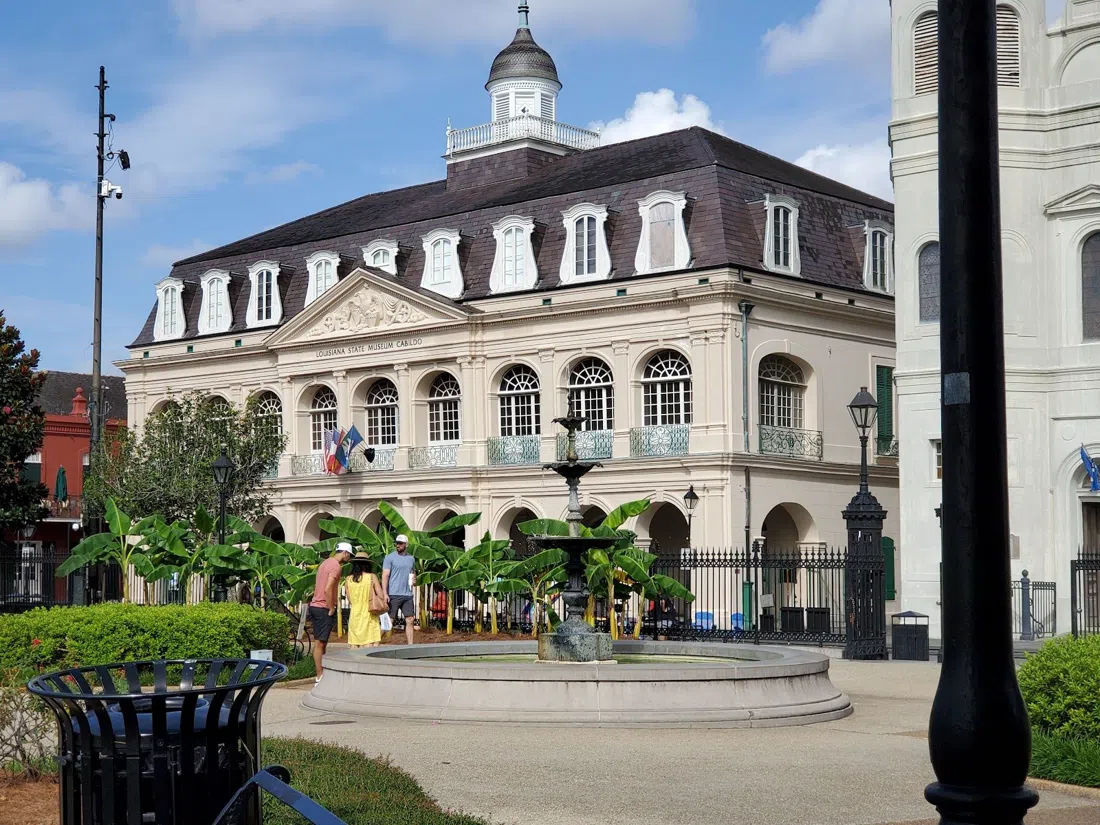
The two buildings that flank the cathedral
The Cabildo (Jackson Square, French Quarter) is the obvious pairing and the natural next 45 minutes. This is where the Louisiana Purchase was signed, and the museum inside handles the colonial and antebellum history the cathedral only gestures at. Admission is $15 for adults, $13 for Louisiana residents, free under six. It closes on Mondays and stops selling tickets at 3:30pm. Groups of 15 or more get $1.50 off per ticket with a reservation made by phone. One warning specific to this month: its twin building, the Presbytère on the other flank of the cathedral, is shut for building upgrades through 30 September 2026, so do not build a September itinerary around it.
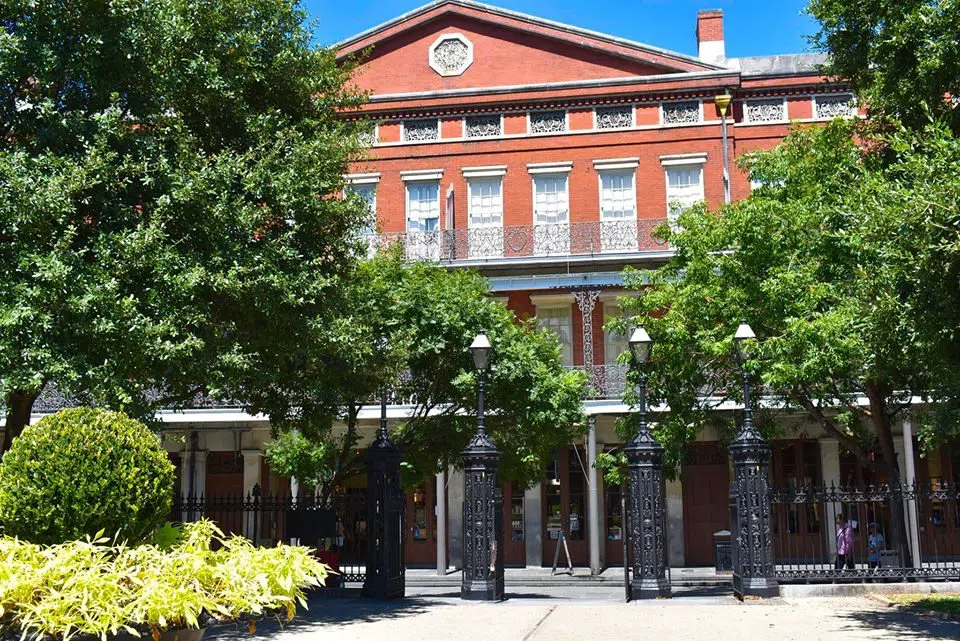
1850 House (Lower Pontalba, Jackson Square) is the quiet counterweight. At $10 for adults and $8 for Louisiana residents, free under six, it is the cheapest way inside the Pontalba buildings that frame the square, and the only place that shows how the people who lived directly opposite the cathedral actually lived: rooms, stairs, service spaces, the lot. The rooms are small and the stairs narrow, so it suits couples and parties under about a dozen; group discounts exist with a reservation. It closes for maintenance on Monday 28 September 2026.
Where the story continues a few blocks out
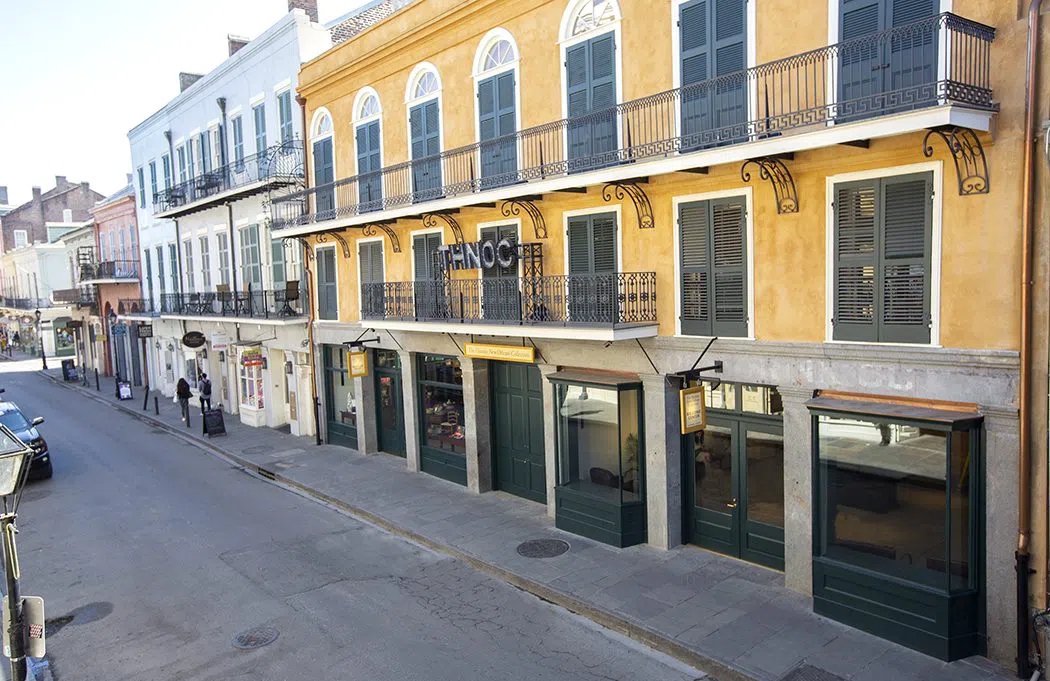
The Historic New Orleans Collection (Royal Street, French Quarter) is two blocks from the square and the best free museum in the Quarter by a distance. Entry needs a free timed ticket, and groups should reserve online rather than arrive together; school groups tour free of charge. It opens Tuesday to Saturday 9:30am to 4:30pm and Sunday 10:30am to 4:30pm, closed Mondays, with a café on site until mid-afternoon. If a wedding shuts the cathedral, this is the fallback that costs you nothing.
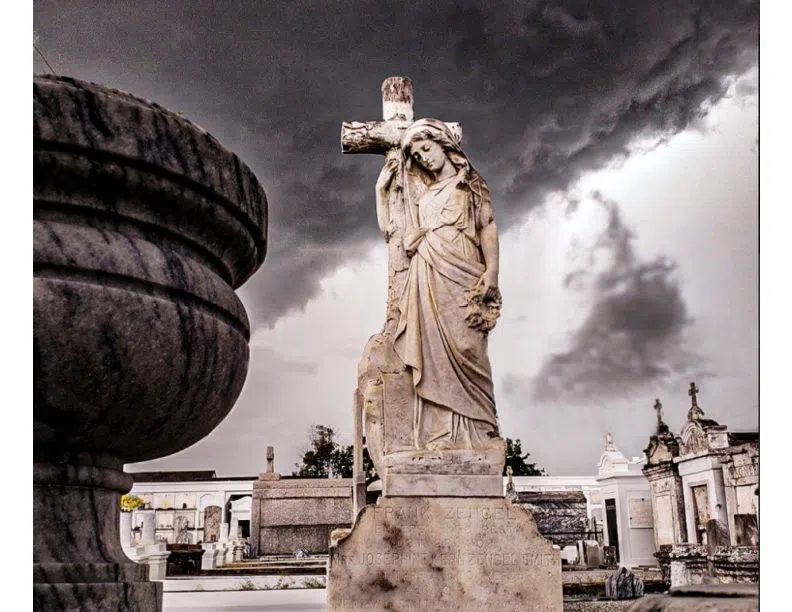
Old Ursuline Convent Museum (Chartres Street, lower Quarter) is six blocks downriver and the oldest surviving building in the Mississippi Valley, a plain, austere counterpoint to the cathedral's showmanship. Admission is $10 for adults, $9 seniors, $7 students and military. The hours are the tight part: Tuesday to Saturday, 10am to 3pm only. Self-guided is the default and docent tours depend on availability, so call ahead if you are bringing more than a handful of people. It is currently showing an exhibit on Pope Leo XIV's New Orleans ancestry.
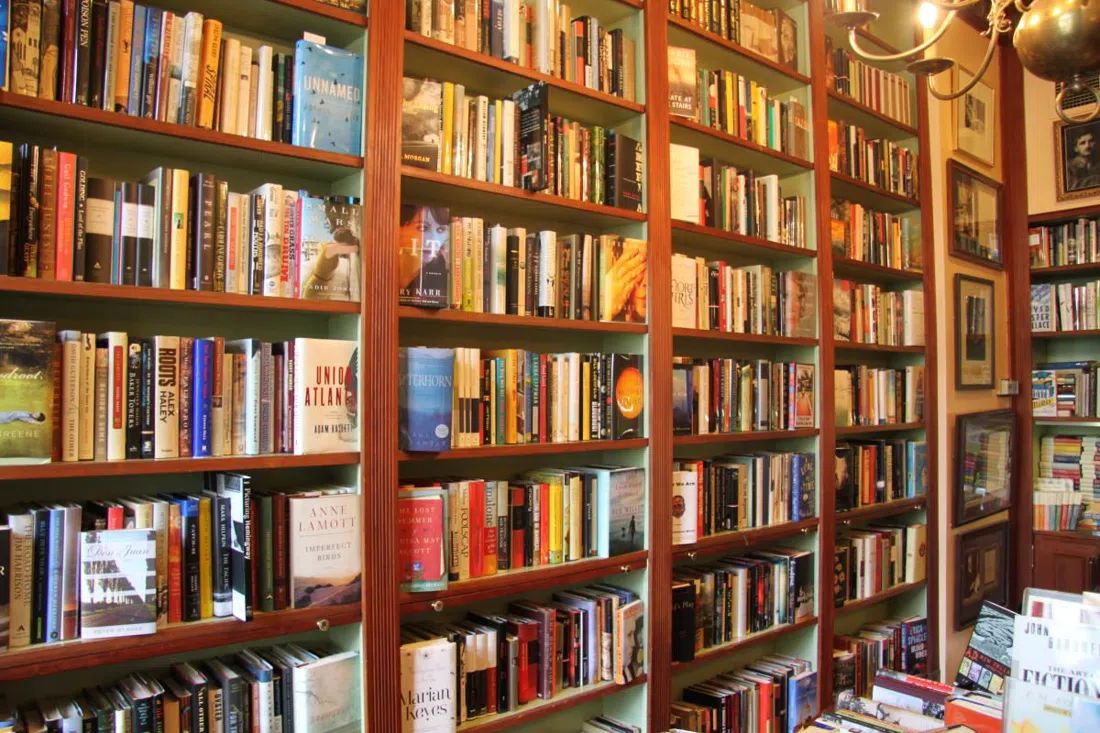
Faulkner House Books (Pirate's Alley, French Quarter) is thirty seconds from the cathedral's flank and the quietest room in this entire piece. William Faulkner lodged here in 1925; it is now a genuine independent bookshop, open daily 10am to 5pm, free to browse, with books from around $15. There is space for perhaps six people at a time. Send a group through in shifts or not at all.
Eating and drinking within sight of the spires
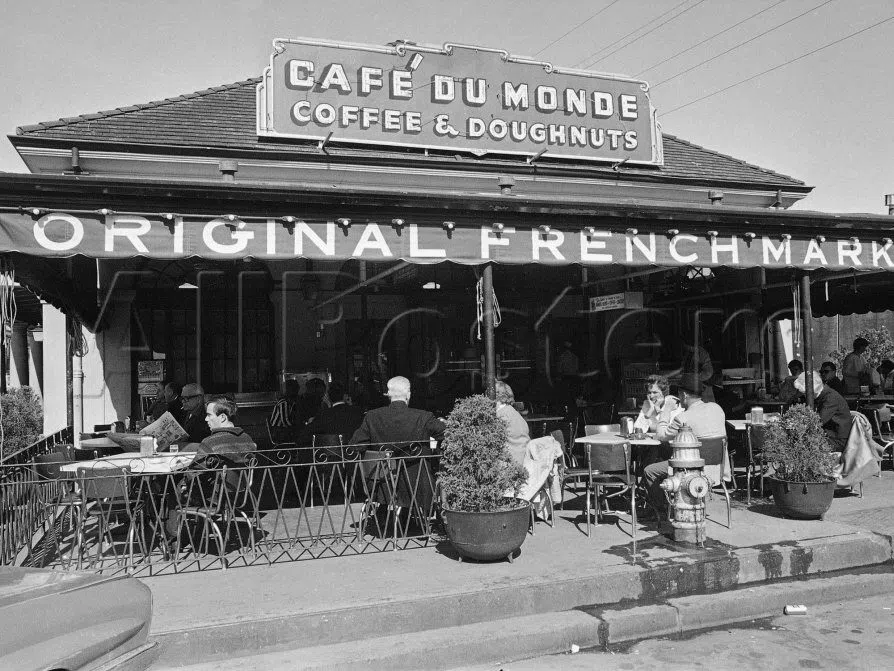
Café du Monde (French Market stand, Decatur Street) is two minutes from the cathedral steps and the reason the square smells of chicory. The original 1862 stand takes no reservations and offers no table service beyond the counter runners, so you queue, then hover for a table as one frees up. Three beignets run about $4 to $6, coffee similar. The queue is shortest before 8am and after 10pm, which lines up exactly with the cathedral's own quiet hours.
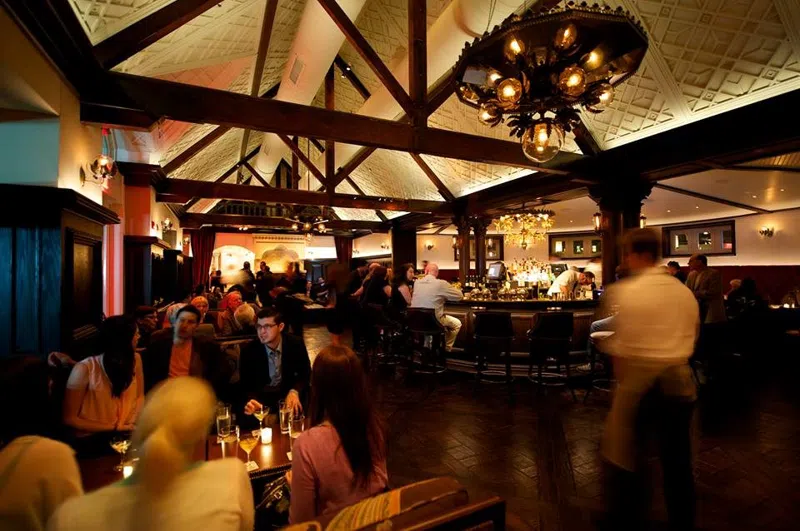
Pirate's Alley Café & Olde Absinthe House (Pirate's Alley) is the closest bar to the cathedral door, pressed literally against its garden wall. Drinks are roughly $10 to $16; it opens 10am to midnight Monday to Thursday and to 2am Friday to Sunday. Indoors is tiny, and groups spill out onto the alley flagstones, which is how the regulars drink here anyway. This is where you go when the cathedral shuts at four.
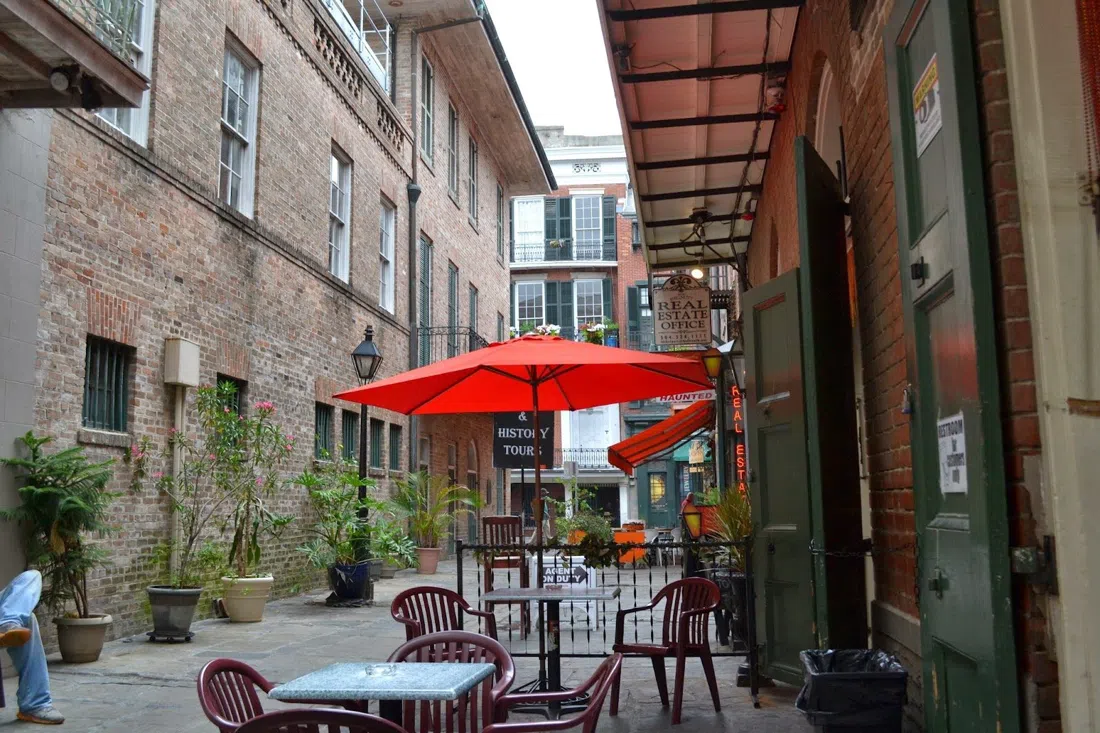
Muriel's Jackson Square (Chartres at St Ann) is the obvious sit-down dinner on the square's edge, with mains roughly $30 to $50. It opens from 3pm on weekdays and from 10:30am at weekends for brunch. It handles groups better than anywhere else here: the Wine Room seats ten, the whole second floor takes large parties, and there is an events team for anything bigger. Book the second floor if you want the ghost story served alongside the turtle soup.
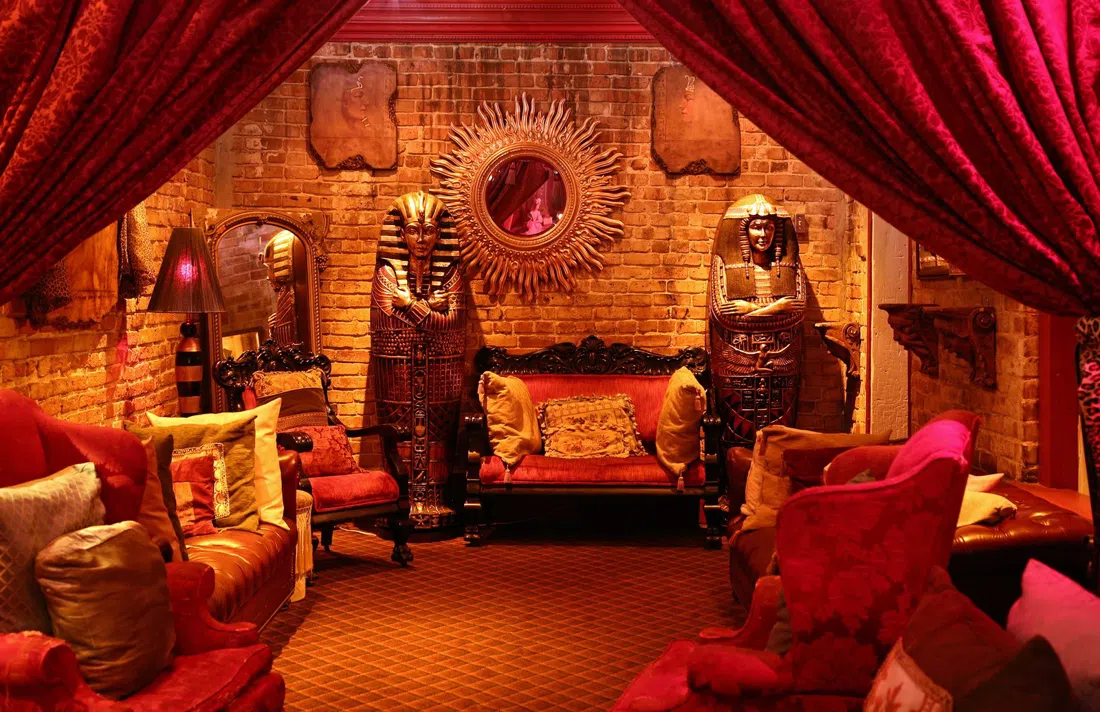
Dickie Brennan's Tableau (corner of Jackson Square, sharing a building with Le Petit Théâtre) is the best paid seat for the cathedral facade. Mains run about $30 to $45, private dining is available, and the balcony can be held for a party, but reserve well ahead, because the balcony at golden hour is the shot most people came to the city for.

Napoleon House (Chartres Street, three blocks from the square) is the least touristy room in this cluster despite being the most famous of them. Open 11am to 10pm daily, sandwiches and mains roughly $15 to $30, run by the Impastato family from 1914 and by Ralph Brennan since 2015. It takes walk-ins only and no reservations at all, so a large group will wait; the courtyard absorbs mid-size parties best.

The steeples from the water
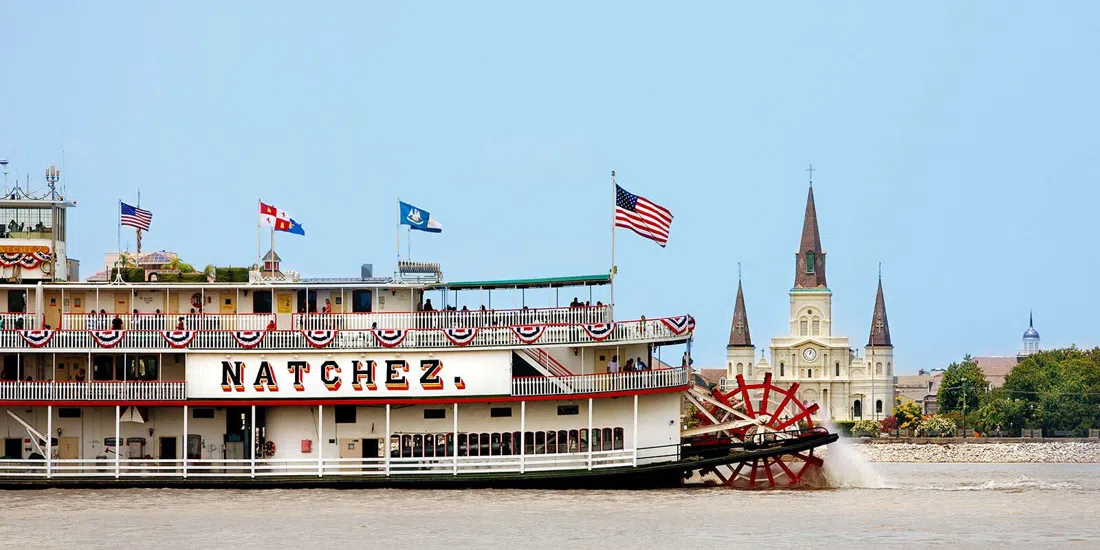
The Steamboat Natchez (400 Toulouse Street wharf, riverfront) boards five minutes' walk from the cathedral and gives you the three steeples from the Mississippi, which is the angle from which the city was first seen. The 75-minute sightseeing cruise starts at $25.75; sightseeing seats on the meal cruises run $43.50 to $58, and $65 to $107.50 with lunch, brunch or dinner included. Parties of ten or more collect physical tickets from the Lighthouse Ticket Office before boarding, so build in ten extra minutes for that. It is the single best add-on to a half day around Jackson Square.
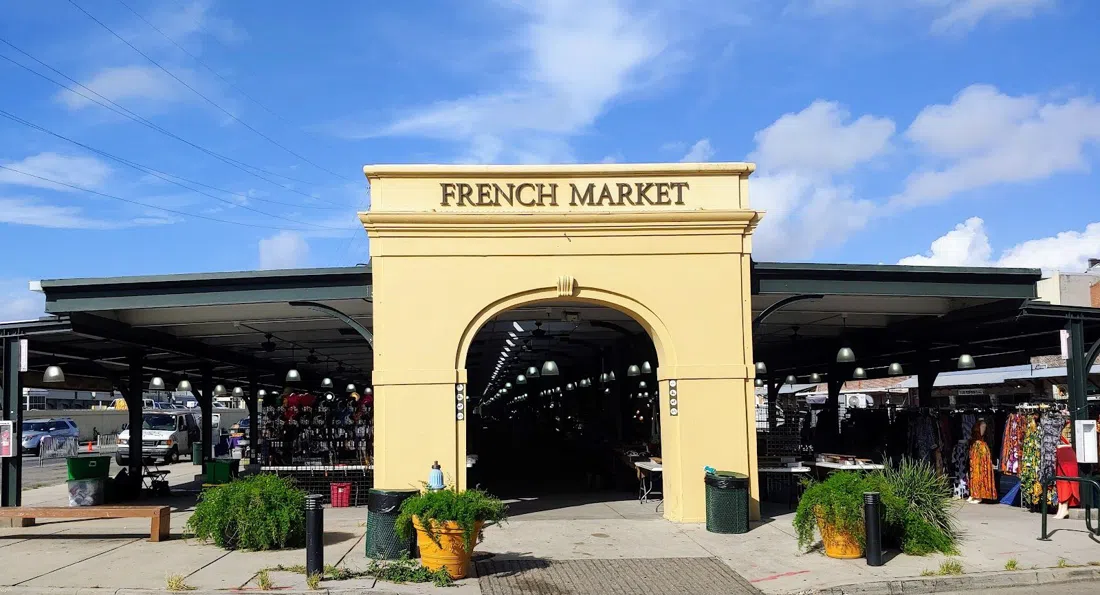
Walk there through the French Market District (downriver end of Decatur and North Peters) if you have the time. It runs daily including holidays, retail shops 10am to 5pm and the farmers and flea markets until 6pm, and it links the cathedral to the riverfront by way of the Moon Walk promenade along the levee: flat, shaded in parts, and the easiest orientation walk in the Quarter.
Best time to go in September
Go in the morning, and go early. September here is still deep summer weather, with heavy humidity from mid-morning, real heat by noon, and the afternoon thunderstorm that arrives, soaks the flagstones and clears in half an hour. It is also inside hurricane season, so keep the plan loose and keep an indoor fallback on the list.
The sequence that works is beignets before 8am while the queue is short, the square when the garden gates open, the cathedral at 9:30 when the doors do, then the Cabildo before the heat peaks. By 1pm you want to be indoors or on the water. Come back to Washington Artillery Park or a booked balcony table for the last hour of light.
Weekdays beat weekends, mostly because weddings cluster on Saturdays and the cathedral closes to visitors when one is on. And treat Monday as a warning: the Cabildo and the Historic New Orleans Collection are both closed, the Old Ursuline Convent opens Tuesday to Saturday only, and the 1850 House is shut for maintenance on Monday 28 September 2026. A Monday in this square is cathedral, park, bookshop and food, which is pleasant but half the story.
Is it worth it
Yes, with the expectation set correctly. If you arrive expecting a great European cathedral you will be inside for twelve minutes and wonder what the fuss was. If you arrive understanding that this is a small, still-working church that happens to be the visual anchor of one of the most coherent public squares in North America, you will get several hours out of it and spend almost nothing.
It suits first-time visitors, anyone with an interest in the colonial history, families with children who need a short attention span respected, and couples who want an unhurried walkable morning. It suits large groups less well: the paid cathedral tour caps at 20, the bookshop holds six, the 1850 House wants parties under a dozen, and Napoleon House will simply make you wait. Skip the $12.50 audio tour unless the architecture is genuinely why you came; the $1 brochure and the free square do most of the work. The one paid thing that consistently earns its price here is the river cruise, because it gives you the only view of the spires you cannot get on foot.
Practical notes
Everything in this piece is within a ten-minute walk of the cathedral steps. Do not drive into the Quarter: parking is expensive and awkward, and the streets are narrow. The Riverfront streetcar runs along the levee side if the heat makes the French Market walk unappealing.
Carry small bills. The cathedral has a donation box and a $1 brochure, and the square's artists and musicians work in cash, and the beignet counter moves faster when you are not fumbling with a card. Museums and restaurants all take cards normally.
A free day is genuinely possible: cathedral, Jackson Square, Washington Artillery Park, the Historic New Orleans Collection with a booked free ticket, the French Market and the Moon Walk. A modest museum day is about $25 a head for the Cabildo and 1850 House together, or $30 for the volunteer-led walking tour with the 1850 House included. Add $25.75 upward for the river. Dinner on the square is the line item that moves the total.
Cathedral hours are 9:30am to 4pm daily, last entry 3:45pm, and it closes without notice for weddings and funerals. The Cabildo and the Historic New Orleans Collection close on Mondays. The Old Ursuline Convent opens Tuesday to Saturday, 10am to 3pm. Check the cathedral's day calendar the morning you go.
A room inside the Quarter or on its edge is what makes the early start possible. Compare rates with the New Orleans hotel search, and if you are building the rest of the trip around this morning, the wider New Orleans guide covers the districts beyond the cathedral's shadow.