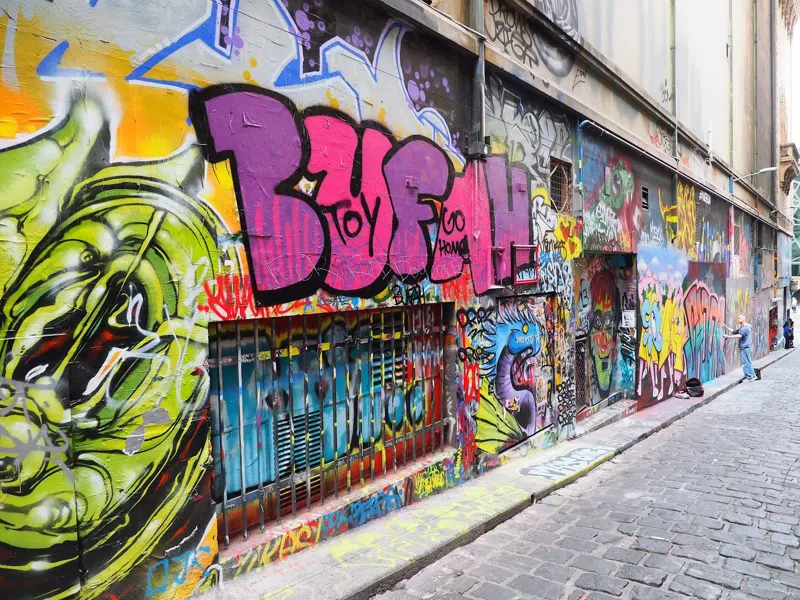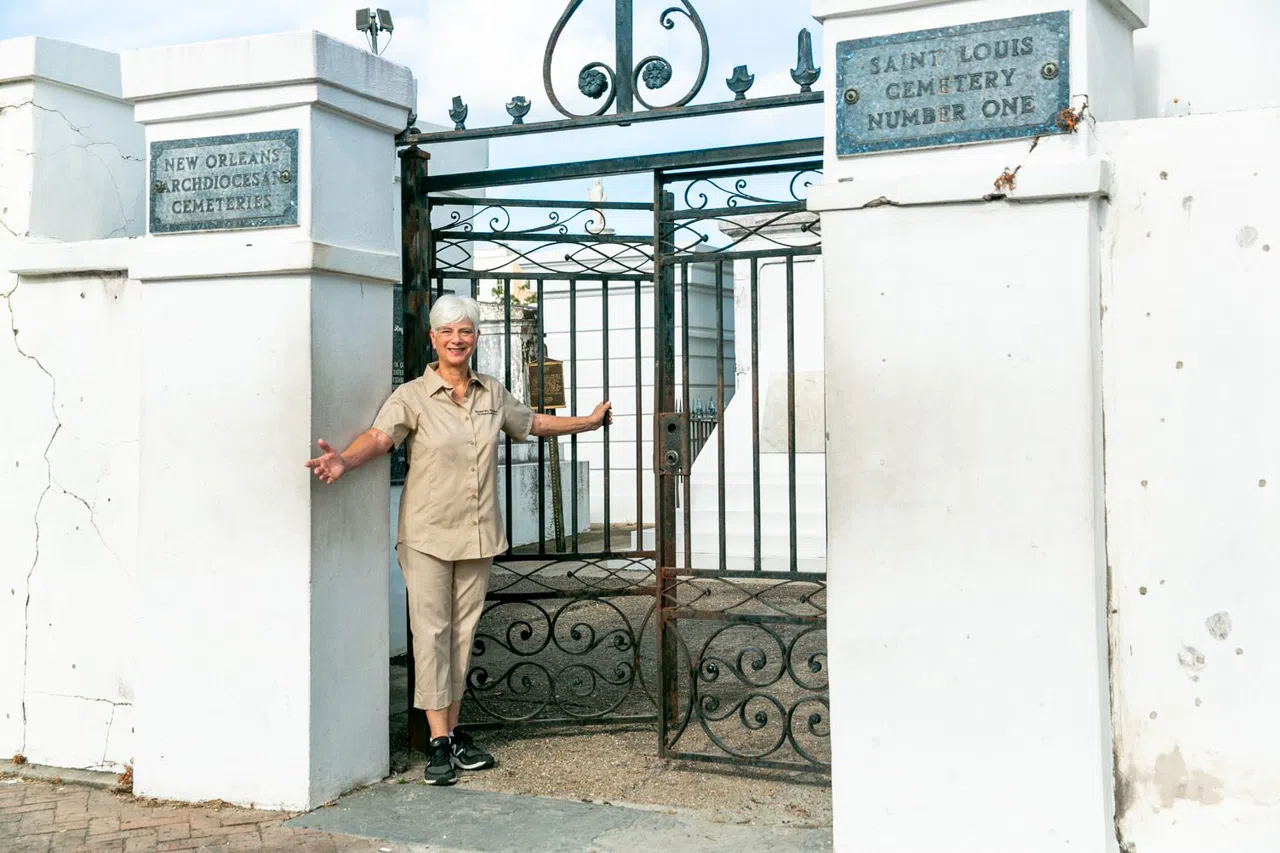

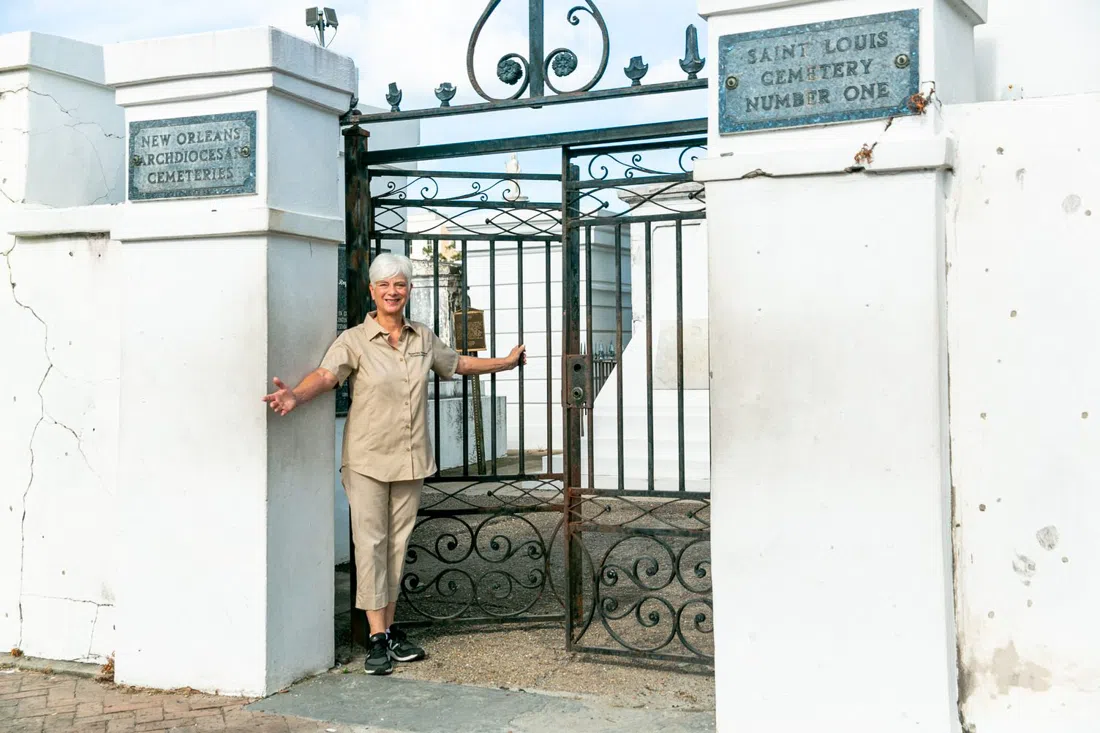
The wall along Basin Street is white, plain and taller than you expect, and the gate set into it will not open for you on your own. Behind it, a few hundred tombs stand shoulder to shoulder in lanes barely wider than a hallway, plastered brick gone chalky in the sun, each one stacked with generations of the same family. In September that block holds heat like a closed courtyard, and the hour you choose will shape your visit more than anything your guide says in it.
What is behind the white wall
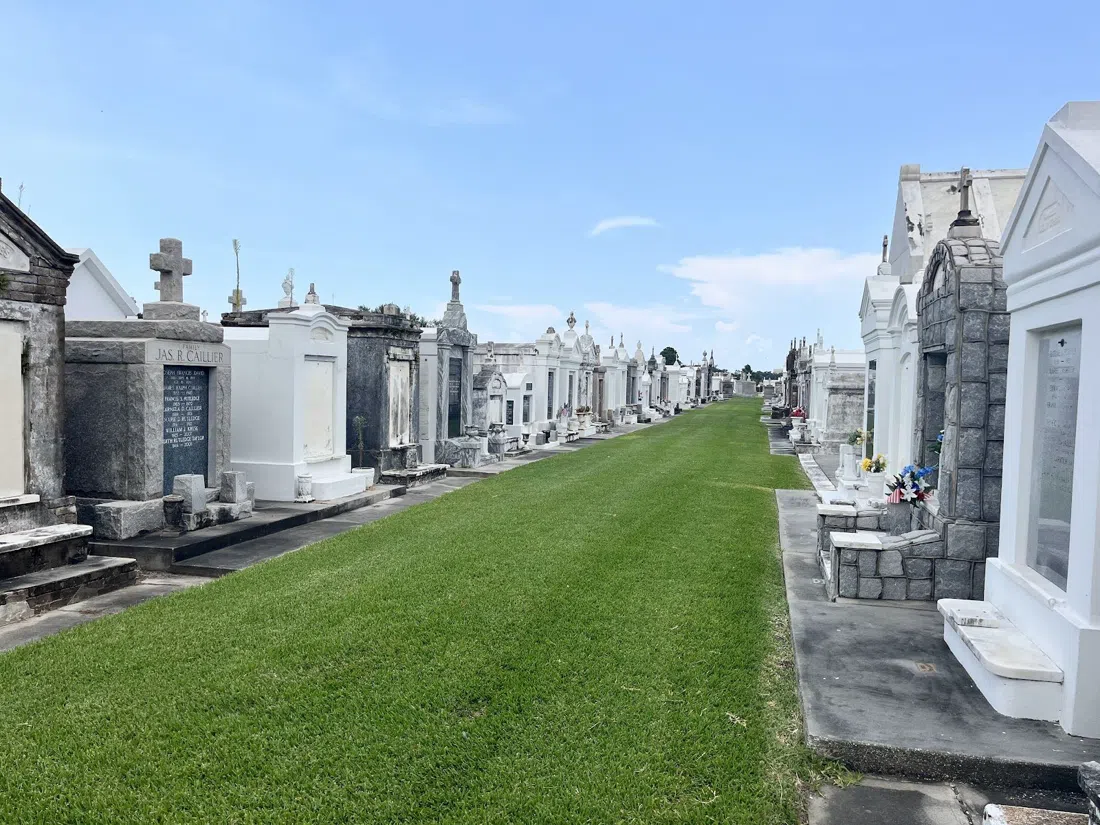
St. Louis Cemetery No. 1 (Basin Street, where the French Quarter meets Tremé) is the oldest surviving cemetery in the city, laid out in 1789 after fire and fever pushed the colonial town to bury its dead outside the old ramparts. What you see is not a lawn with headstones. It is a walled block of family tombs built upward in brick and stucco, whitewashed and re-whitewashed, arranged along alleys so tight that a party of twenty walks single file and stops in clumps. Along the perimeter run the wall vaults locals call ovens, a long terrace of rented shelves where a body stayed a year and a day before the remains were swept down into the vault below and the space let again.
That one piece of information rearranges the place for most visitors. A tomb here is not one grave; it is a slow, reusable apartment block, which is how a footprint this small holds so many thousands of burials. You will be shown the tomb most closely associated with Marie Laveau, the nineteenth-century Creole practitioner whose name sells half the tours in this city, and you will be shown the plaster scarred by decades of visitors scratching marks into it, which is the short version of why the gate is locked now. You will pass society tombs built by benevolent associations for members who could not afford a family plot, old denominational divisions, and a great deal of quiet, expensive restoration.
It is a small site. You can see all of it in under an hour. The value is almost entirely in what is explained to you while you stand there.
Why nobody walks in alone any more
This is the fact most international visitors arrive not knowing, and it wastes a lot of mornings. There have been no public walk-ins since 2015. Entry is limited to people with a licensed guide, or to families holding an Archdiocese pass for a tomb they own. You cannot pay at the gate, you cannot talk your way in, and turning up hopeful at ten in the morning with a guidebook is a bus ride wasted.
So you book, and you book before you leave your hotel. A guided day visit runs about USD 25 to 29 for an adult. The after-dark version, which trades the heat for lamplight and a very different kind of hush, runs roughly USD 41 to 49. Official departures cap at 20 people, so a party of thirty is not getting on one tour: you either split across two departure times or arrange a charter in advance, and that is a phone-call-and-email job rather than something to solve at the desk on the day. Departures run seven days a week, and across the guided options here travellers have left more than ten thousand reviews, so finding a slot in September is rarely the problem. Finding the right hour is.
One local footnote worth knowing: holders of a Louisiana ID get in free on All Saints' Day (1 November), All Souls' Day (2 November) and Good Friday. Those are family days, and they change how every cemetery in the city operates.
Where the tour begins
Almost everything about the cemetery half of your day is easier if you treat Basin St. Station Visitor Center (Basin Street, directly across from the cemetery) as your base. It is free and unticketed, it holds the tour desk and the bus ticket window, it has a small local-history exhibit worth ten minutes, and it has toilets and working air conditioning. In a city where a September afternoon carries a heat index well above the air temperature, a building where a group can assemble indoors instead of on hot pavement matters. Coach-sized parties are routine here. On-site parking is around USD 10 a day, which is cheap for this end of town.

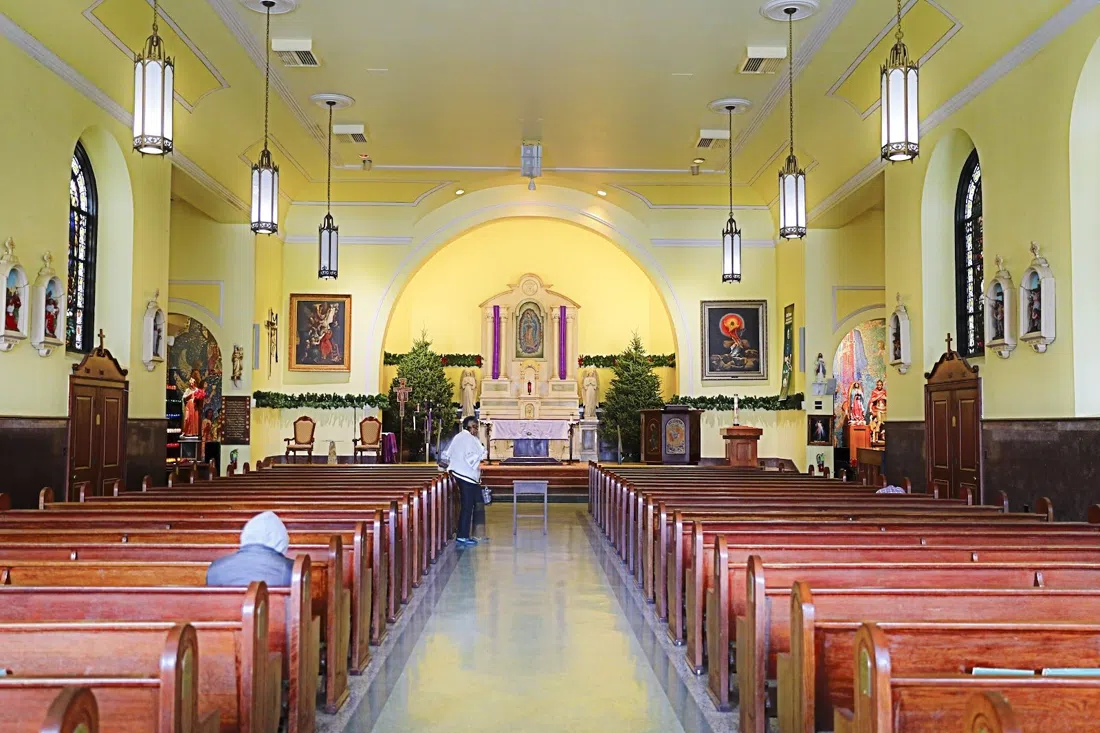
Two minutes from the gate stands Our Lady of Guadalupe Church & International Shrine of St. Jude (Basin Street, on the Tremé edge), built in 1827 as the mortuary chapel for exactly this cemetery. Fever victims were carried here because the city would not have their funerals inside the cathedral. Step in before or after your tour and the geography stops feeling arbitrary; the chapel explains why the cemetery sits where it sits. Entry is free during church hours and the building is still in daily use, so keep to the aisles, keep your voice down, and do not walk a group through during Mass or confession.
Riding the loop to Stop 5
The cemetery sits just far enough from the middle of the Quarter that the September walk back is an ordeal rather than a stroll, which is where the open-top loop earns its keep. City Sightseeing New Orleans (hop-on hop-off, 18 stops across the Quarter, Tremé, the Garden District and the Mint) puts Stop 5 at the cemetery gate, and a full circuit takes about 90 minutes. Buses run 9:30am to 5:30pm daily, every 25 to 30 minutes. Tickets are USD 49 to 51 for 24 hours, about USD 54 for 48 hours and about USD 63 for 72. Boarding is rolling, so there is no party-size limit, there is a separate desk for group tickets and private charters, and every double-decker has an electronic ramp for wheelchair users.
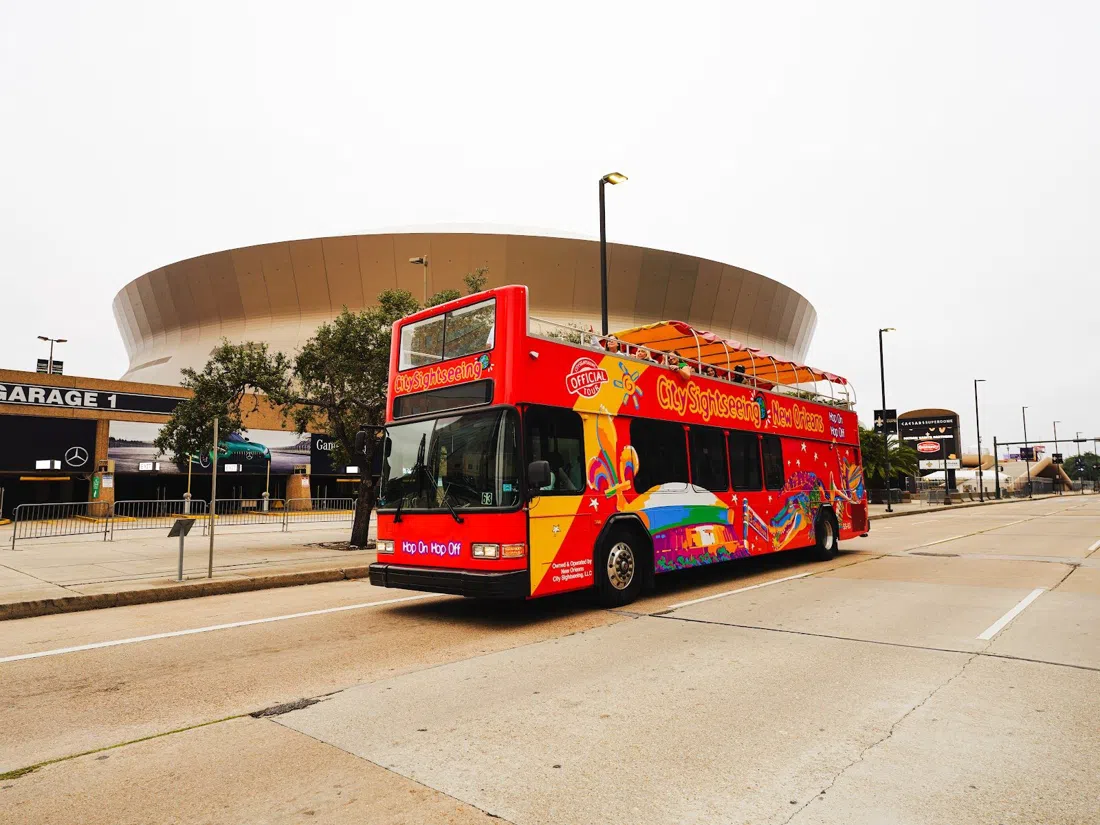
Used well, the loop is the spine of the day rather than a sightseeing novelty: the ride between stops is the most reliable shade and breeze you will get between eleven and four. In the wrong seat it is 90 minutes in direct sun. Sit on the lower deck in the middle of the day and go upstairs early or late.
The block behind the cemetery
Do not treat the cemetery as a standalone errand. The ground immediately behind it is the reason it is there at all.
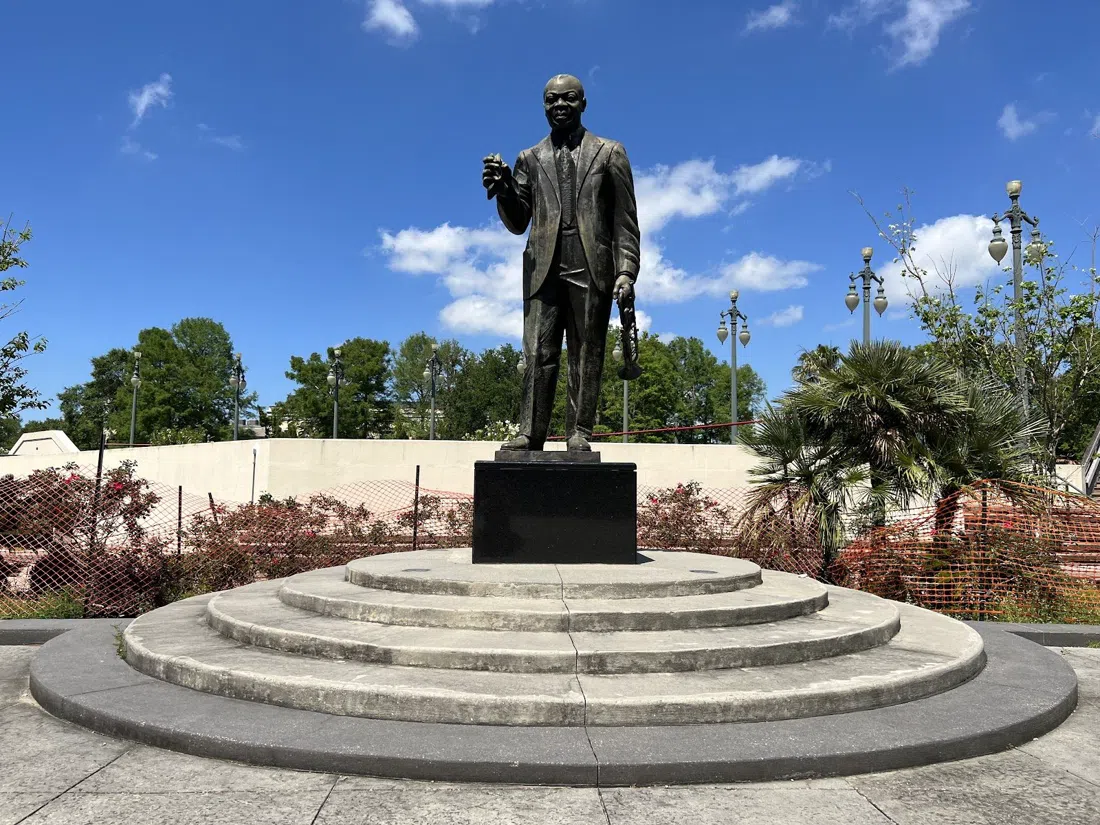
Louis Armstrong Park & Congo Square (Tremé, directly behind the cemetery block) is 30 free, open acres, and Congo Square inside it is where enslaved and free people of colour were permitted to gather on Sundays to drum, trade and dance. That is the soil jazz grew out of, and standing on it costs nothing. Gates close around dusk, roughly 7pm, so this is a daytime stop. Drum circles and large groups are ordinary here; nobody will look at you twice.
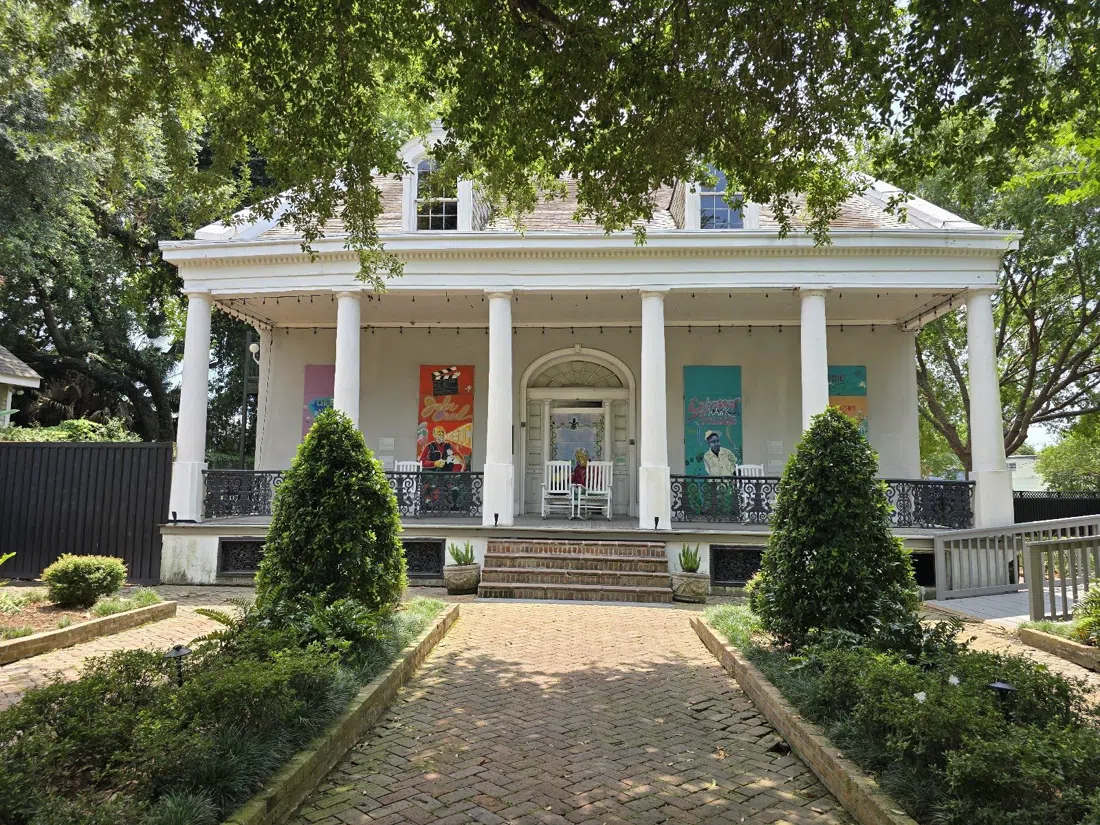
New Orleans African American Museum (Governor Nicholls Street, Tremé) gives you the clearest single explanation of the district around the wall: Tremé as a free-people-of-colour neighbourhood, and what a century and a half did to it. Admission is around USD 20. The catch is the four-day week, Thursday to Sunday, 11am to 4pm, which catches out a lot of mid-week visitors. The historic house has narrow doorways, so larger parties are timed in batches by arrangement rather than walked straight through.
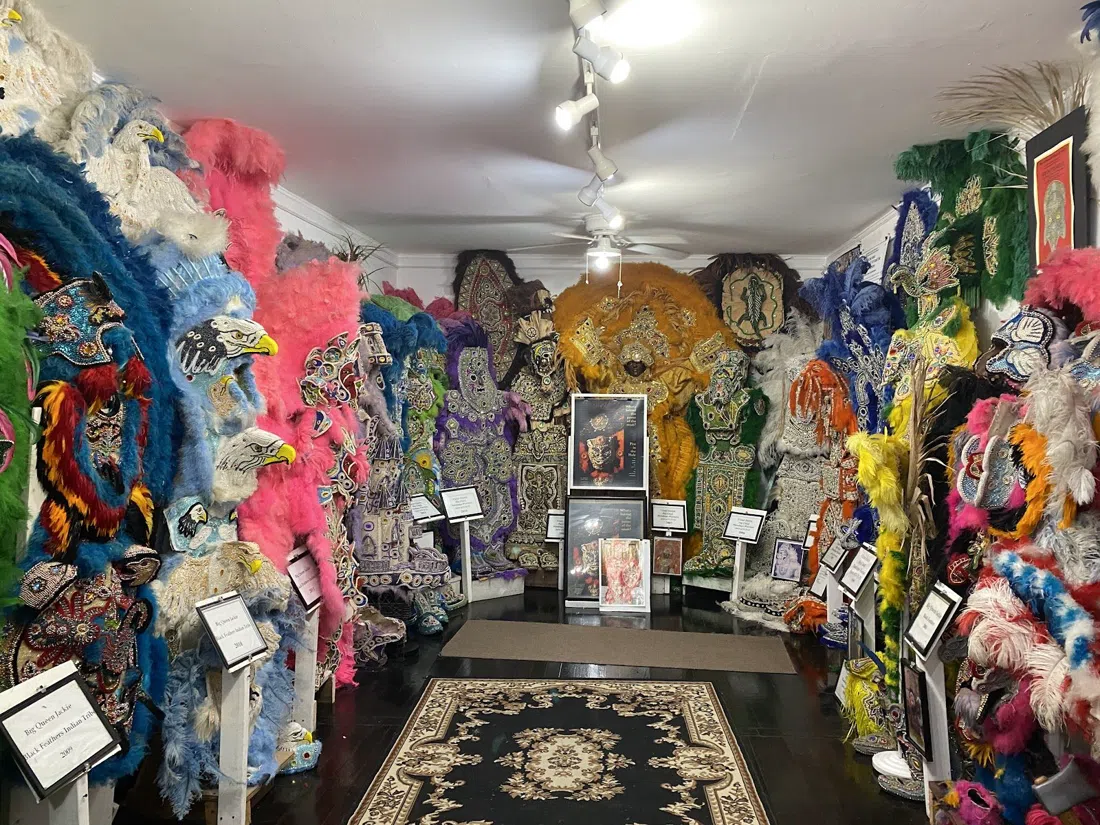
Backstreet Cultural Museum (St. Philip Street, Tremé) is the living-culture counterweight to an hour among tombs: Mardi Gras Indian suits, social aid and pleasure club regalia, jazz funeral material, collected by and for the neighbourhood. Around USD 15, Tuesday to Saturday, 10am to 4pm, closed Sunday and Monday. It moved to St. Philip Street in 2022, so older guidebooks and stale map pins still send people to a shuttered building, and the rooms are small. Fine for a handful of people, book ahead for anything more.
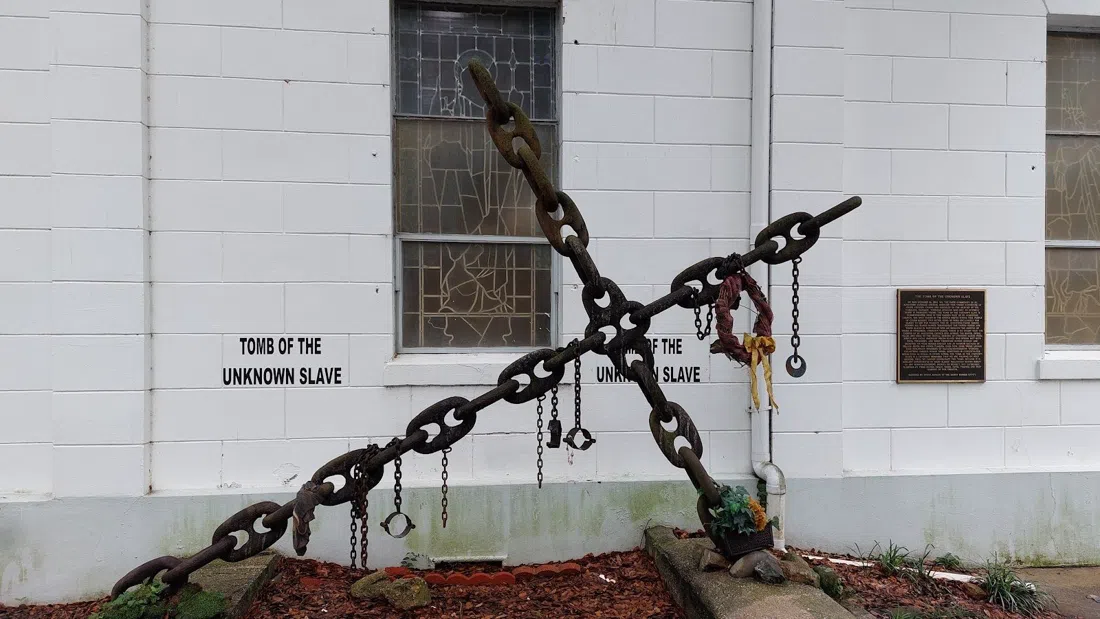
St. Augustine Catholic Church & Tomb of the Unknown Slave (Governor Nicholls Street, Tremé) is the oldest historically Black Catholic parish in the country. The memorial in the garden, a cross made of chains, stands outdoors and is visible at any hour, which is worth knowing, because Hurricane Ida repairs have pushed some services into the parish hall. Visitors are genuinely welcome at the 10am Sunday Gospel and jazz Mass, but go as a congregant rather than a spectator. Arrive early, sit down, and leave the camera in your bag instead of standing at the back with it.
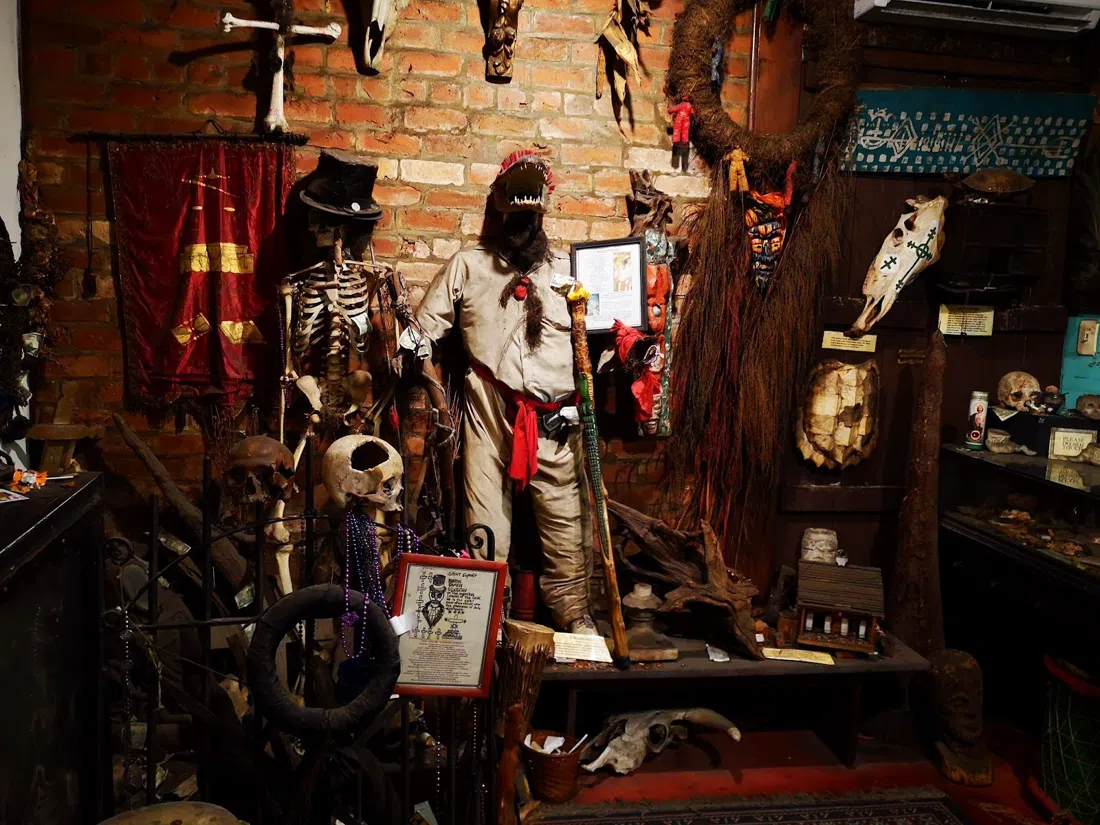
New Orleans Historic Voodoo Museum (French Quarter, a ten-minute walk from the cemetery) is where the Marie Laveau material gets some context. Manage expectations: two cramped rooms, hand-made and idiosyncratic, not a polished institution. USD 10 adult, USD 8 student or senior, USD 5 under 12, open 10am to 6pm daily. Good for a couple, awkward for more than about six of you at once.
The free cemetery if the ticket is the problem
If the guided-entry rule is a dealbreaker, on cost, on principle, or because your party is too big to seat on a single departure, the honest alternative is St. Louis Cemetery No. 3 (Esplanade Avenue, out towards Bayou St. John). It is free, open to the public and to groups with no guide requirement and no ticket, gates roughly 9am to 3pm, and the tombs are frankly grander: marble, ironwork, and room to stand back and look at them properly. What you give up is the 1789 ground and the explanation that comes with a guide. It closes to tourists on All Saints' and All Souls' Days, when the families come.
Coffee, lunch and a table worth planning around
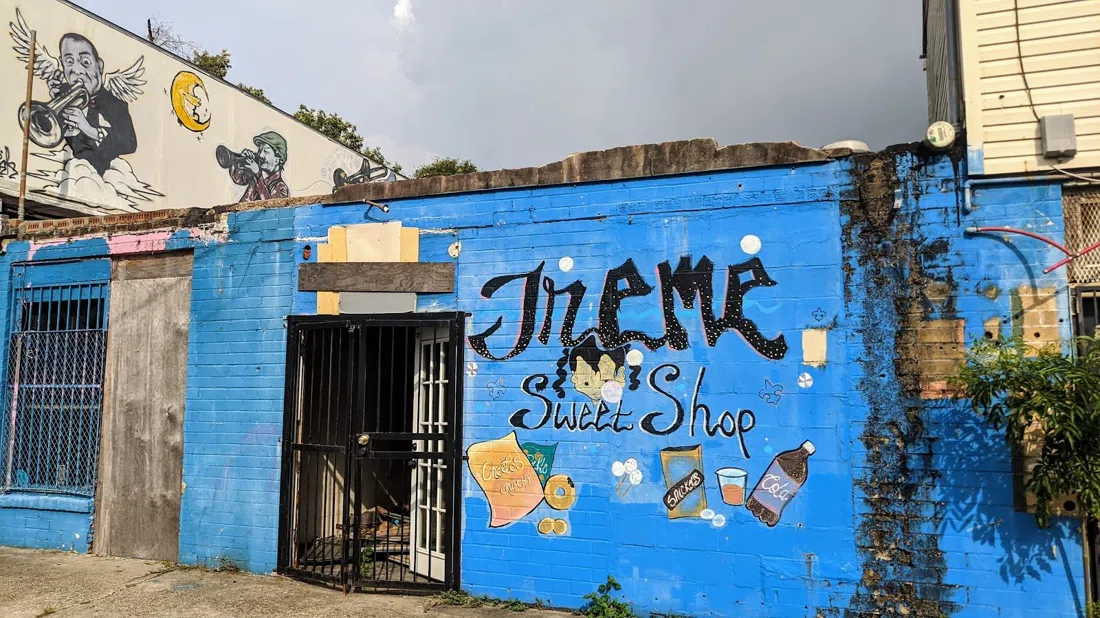
Treme Coffeehouse (Tremé, next door to the Backstreet museum) opens at 7am on weekdays and 8am at weekends, and closes at 2pm. Family-run, counter service, quick turnaround, USD 4 to 12, the practical caffeine stop before an early cemetery slot. A few of you is fine; a coach party is not.
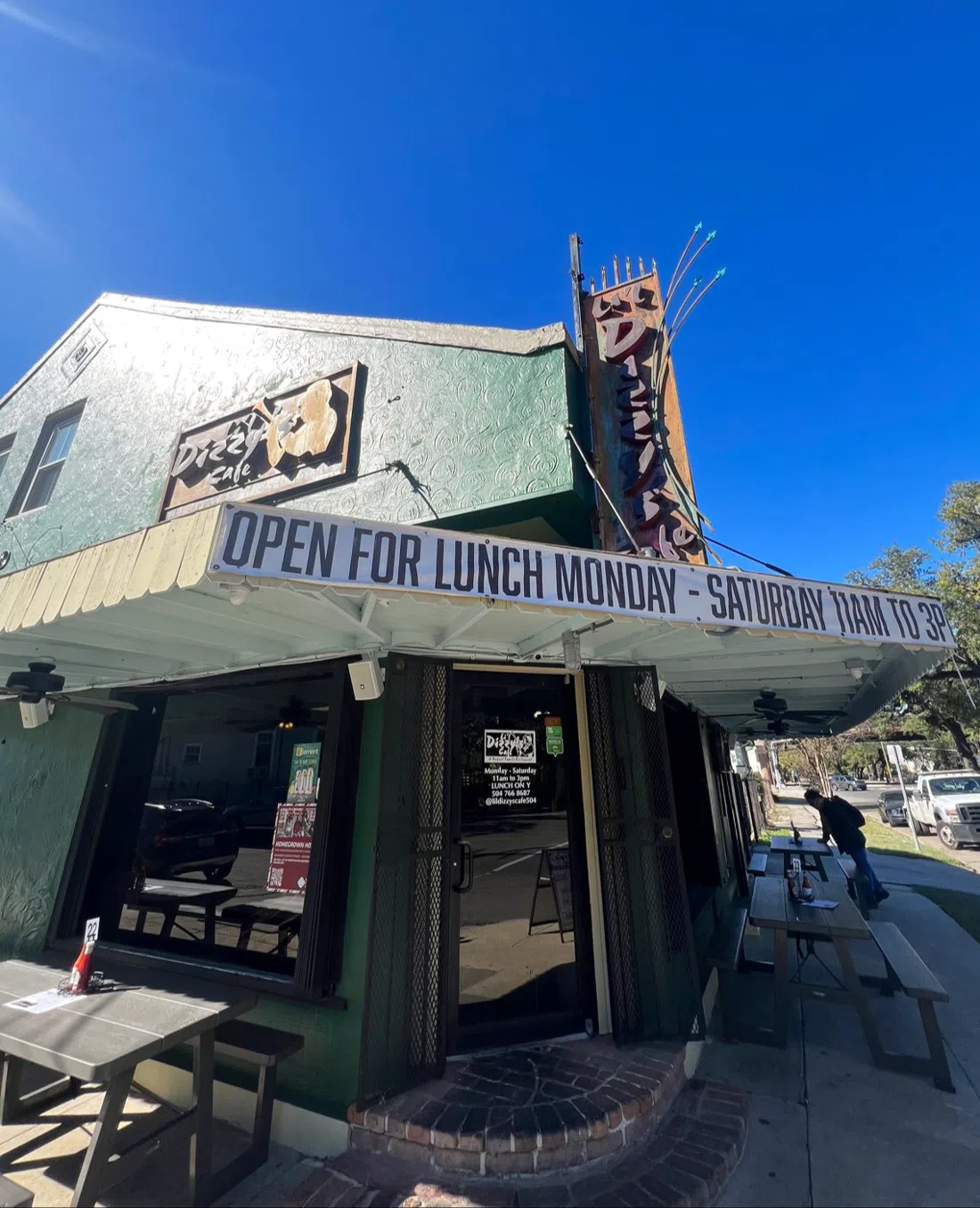
Li'l Dizzy's Cafe (Esplanade Avenue, Tremé) is the lunch answer. Baquet-family Creole cooking, gumbo and fried chicken, USD 15 to 30, indoor and outdoor tables, 11am to 3pm Monday to Saturday. Call 504-766-8687 ahead if there are more than a few of you, and note the 3pm close: this is a lunch plan and cannot be rescued as a dinner one.
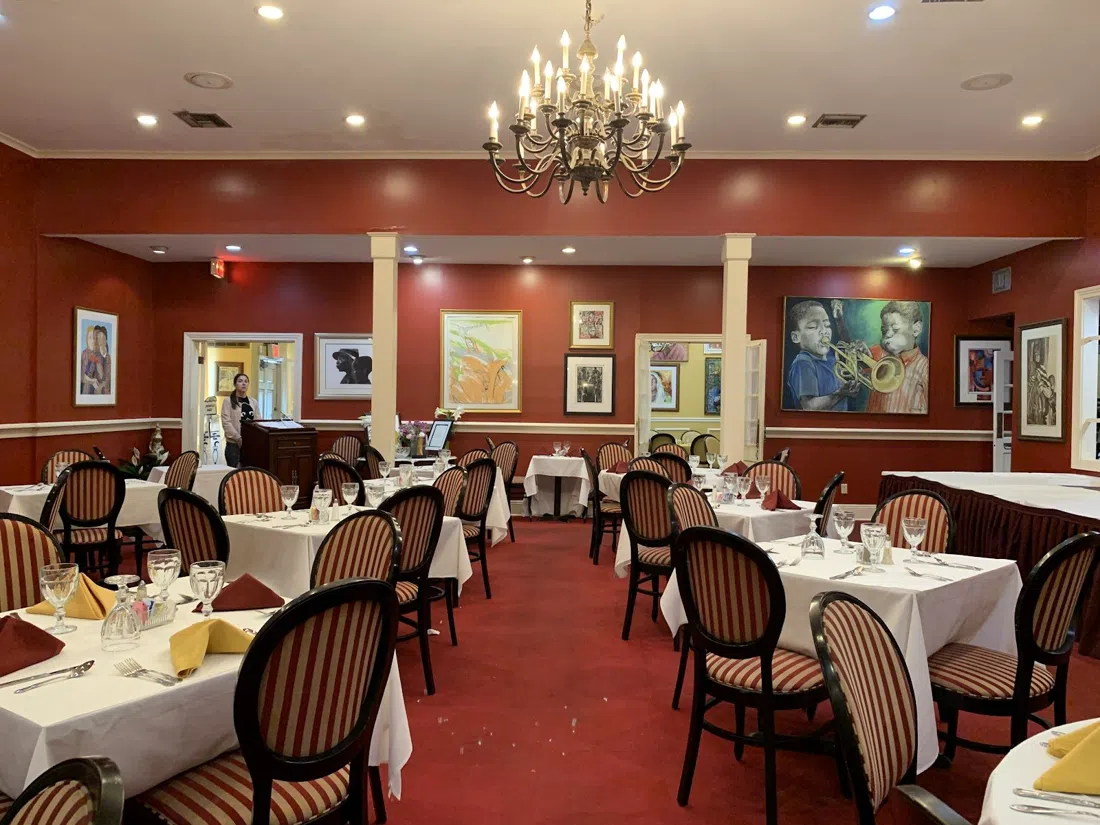
Dooky Chase's Restaurant (Orleans Avenue, Tremé) is the best meal within walking distance of the cemetery and the one that needs real planning. Leah Chase's dining room fed the civil-rights movement in an upstairs room in a segregated city; it now carries a 2025 James Beard America's Classic award and a Michelin Bib Gourmand. USD 30 to 60. Closed Sunday and Monday, lunch Tuesday to Friday 11am to 3pm, dinner Friday and Saturday 5:30pm to 9pm. Reserve well ahead, a month out for a prime slot, and phone 504-821-0600 for a group booking.
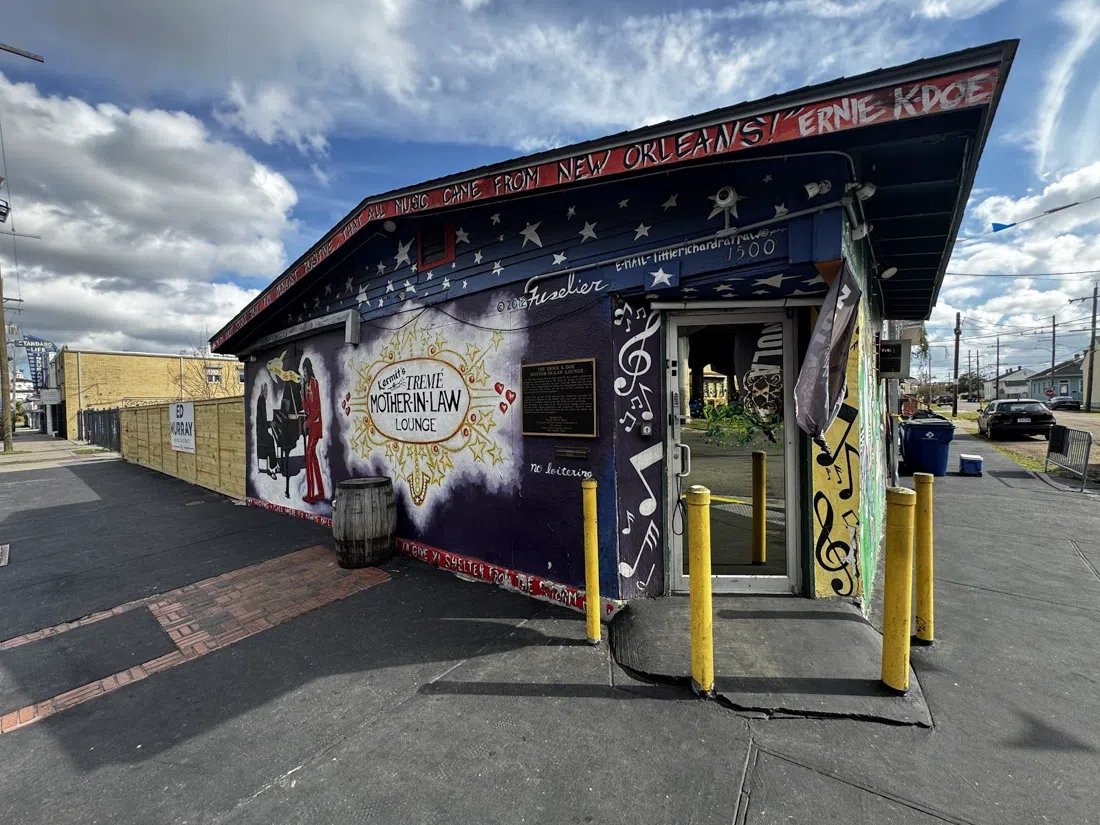
Kermit's Tremé Mother-in-Law Lounge (North Claiborne Avenue, Tremé) is the unvarnished version rather than the marketed one. Kermit Ruffins plays here himself on Mondays and Saturdays, drinks and barbecue run USD 10 to 25 and there is often no cover. Two warnings: the room is genuinely small, and summer hours shrink, so some weekdays it is simply dark. Call before you cross town.
Where the afternoon goes
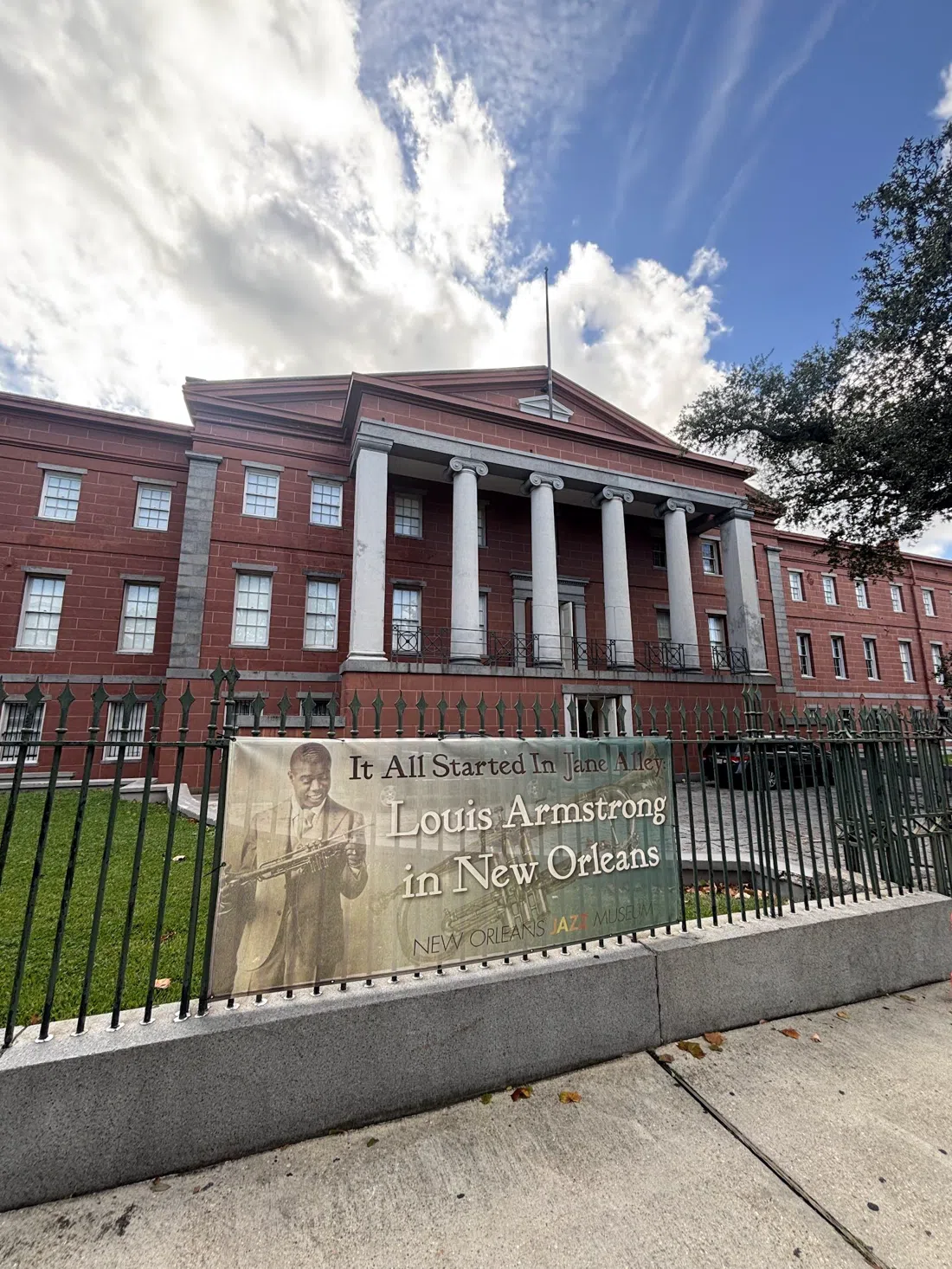
An hour among tombs wants a second half. New Orleans Jazz Museum at the Old U.S. Mint (French Market end of the Quarter) sits on the bus loop and is open Tuesday to Sunday, 9am to 4pm, closed Mondays and state holidays. USD 11 adult, USD 9 student, senior or military, under 6 free. The galleries are large enough to absorb a group comfortably, and there are free 2pm concerts on most open days.
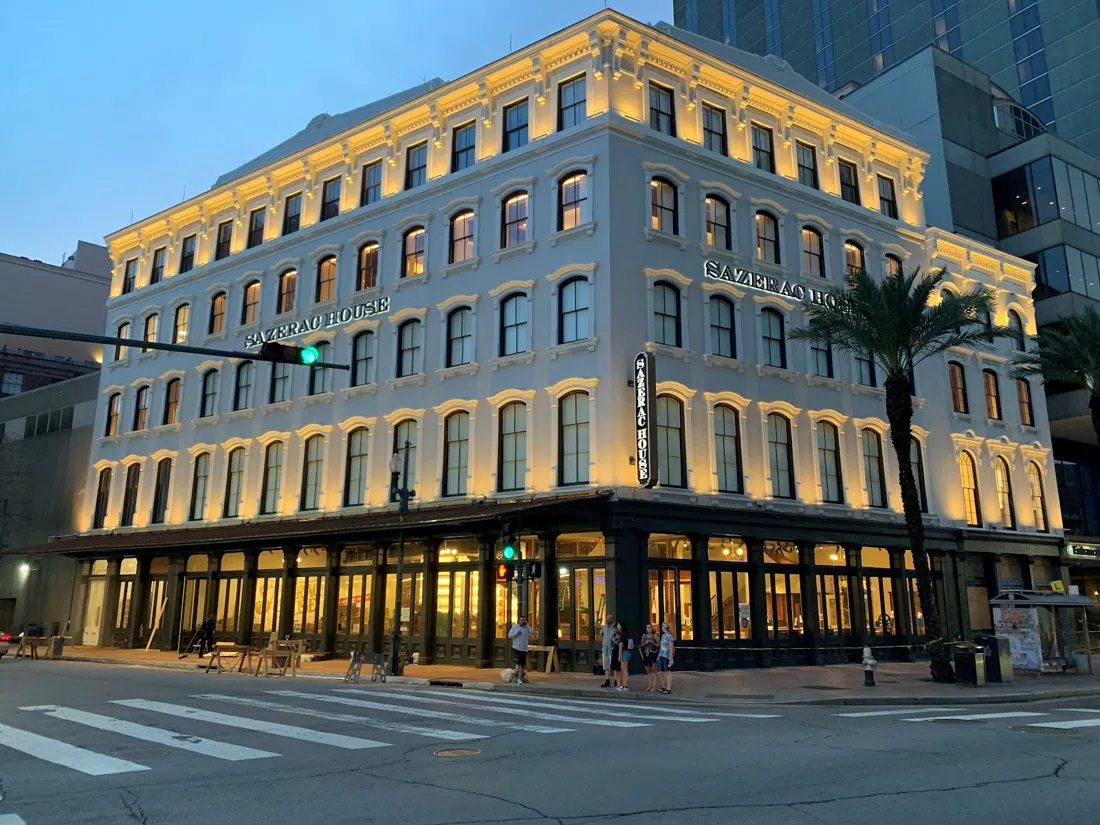
When a September thunderstorm ends the walking, and at some point it will, The Sazerac House (Canal Street, at the edge of the Quarter) is the reliable indoor fallback: three floors on the city's cocktail history, free entry, open daily 11am to 6pm, and on the loop. Reserve a slot online, especially for a group, because capacity is limited. Tastings are 21 and over only and limited per visitor.
Best time to go in September
Take the first departure of the day. The tomb alleys have no shade at all and the white plaster throws light and heat straight back at you; by one in the afternoon the block is punishing, and the late-afternoon storm risk is at its September peak. A 9am or 10am slot gives you cooler stone, softer light and a quieter site.
The after-dark tour is the other good answer. It costs more, roughly USD 41 to 49 against USD 25 to 29, and it buys a different experience rather than a better one: lamplight, a smaller crowd, a silent cemetery, and air you can breathe.
For the day of the week, let the museums decide. Friday is the one day when everything in this article is open at once: Backstreet, the African American Museum, the Jazz Museum, Li'l Dizzy's for lunch and Dooky Chase's for dinner. Monday closes the Jazz Museum, Backstreet and Dooky Chase's; Sunday closes Backstreet and Dooky Chase's but opens the Gospel Mass at St. Augustine.
One more September reality: this is the peak of the Atlantic hurricane season. Book things that can be cancelled, keep the flexible options, and check the forecast the night before rather than assuming a booked slot will run.
Is it worth it
Yes, if you want the history and will pay for a guide. The site is small, the walk is short and the ticket is not free, but what you are paying for is an explanation of how a city that cannot dig deep built its dead upward, and of the Creole, African and Catholic layers that produced the neighbourhood around it. On the merits, it is one of the few paid hours in this city that leaves you knowing something you did not know.
It is not worth it if you were hoping to wander alone among tombs at your own pace, if you are travelling with a party too large to split across departures, or if your interest is a Marie Laveau photograph rather than the place. In those cases, St. Louis Cemetery No. 3 gives you the wandering for nothing, and the Voodoo Museum gives you the legend for USD 10.
Practical notes before you go
Getting there: Stop 5 on the hop-on hop-off loop is at the cemetery gate, which makes a 24-hour ticket at USD 49 to 51 the easy option if you are also doing the Mint or Canal Street. On foot it is about fifteen minutes from the middle of the French Quarter, which is fine at 9am and unpleasant at 2pm. The Canal Street streetcar drops you a few blocks away.
Money: card works nearly everywhere, but carry USD 20 to 40 in small notes for the collection plate at St. Augustine, the smaller museums, street musicians in Louis Armstrong Park and a bar tab at Kermit's. Budget roughly USD 100 to 130 per person for a full day with a guided cemetery tour, a bus ticket, two museums and lunch, less if you skip the bus.
Timing: cemetery slot at 9am or 10am, coffee before it, a museum and Congo Square late morning, lunch by one, indoors through the worst of the afternoon, music after dark. Wear real shoes, because the alleys are uneven brick and shell, and carry more water than you think you need.
Booking and sleeping: reserve the cemetery tour and the Sazerac House slot online before you arrive, and phone the restaurants. For beds, start with the New Orleans hotel search, and staying in the Quarter or on the Tremé side of Rampart Street puts all of the above within walking distance of your room. The wider New Orleans guide covers the rest of the city when you are ready to leave this block.