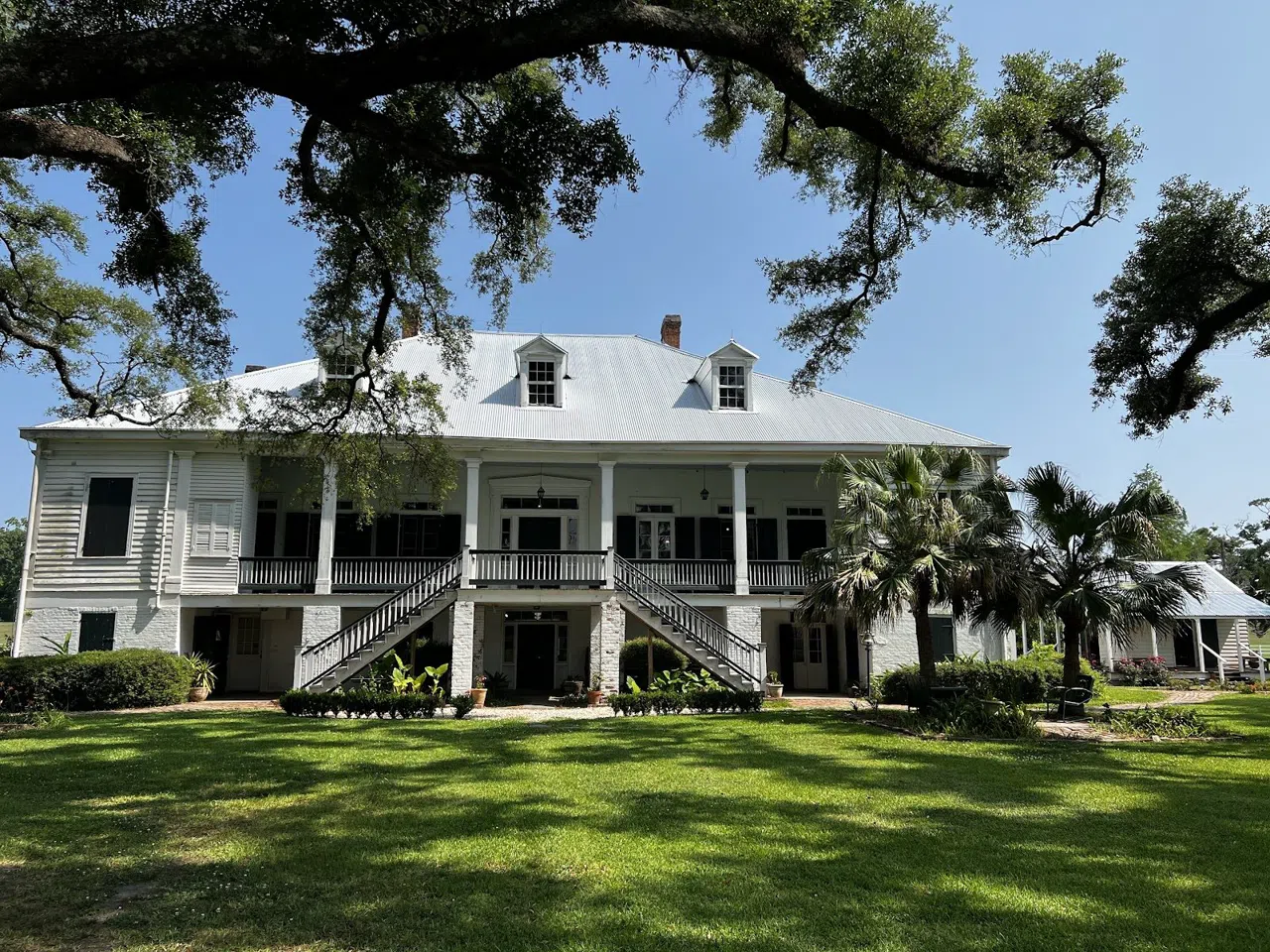

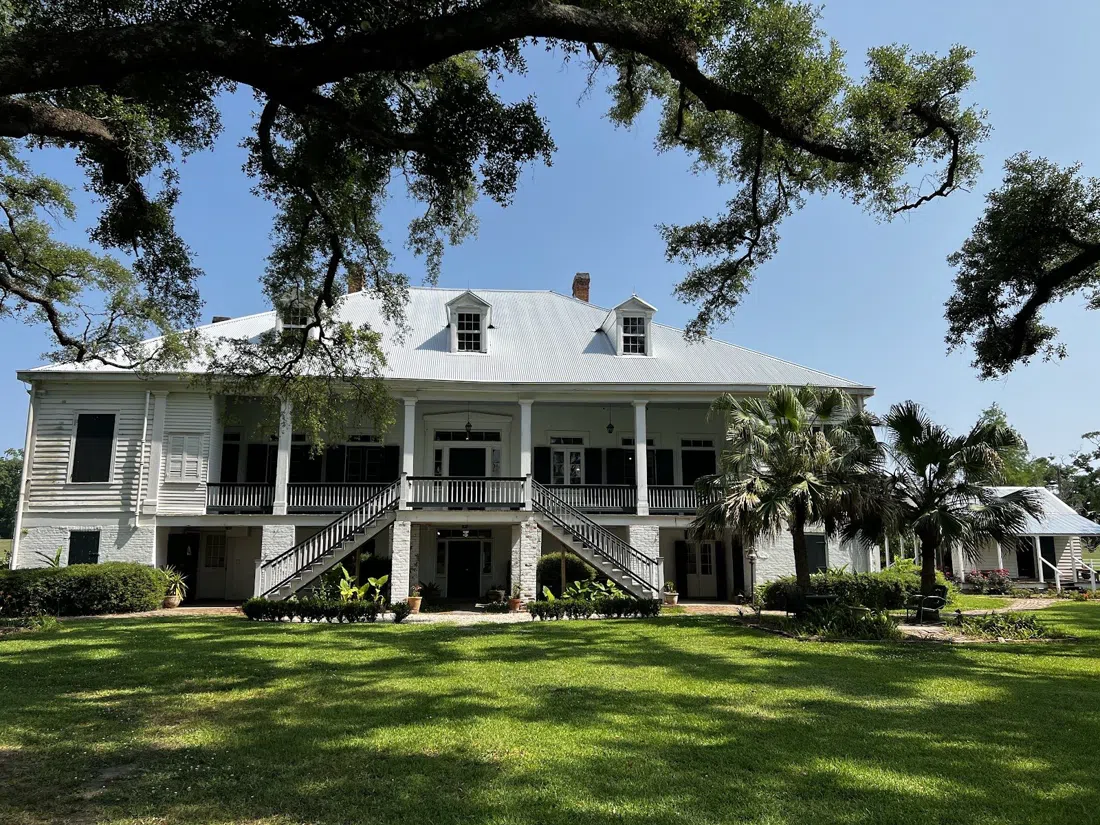
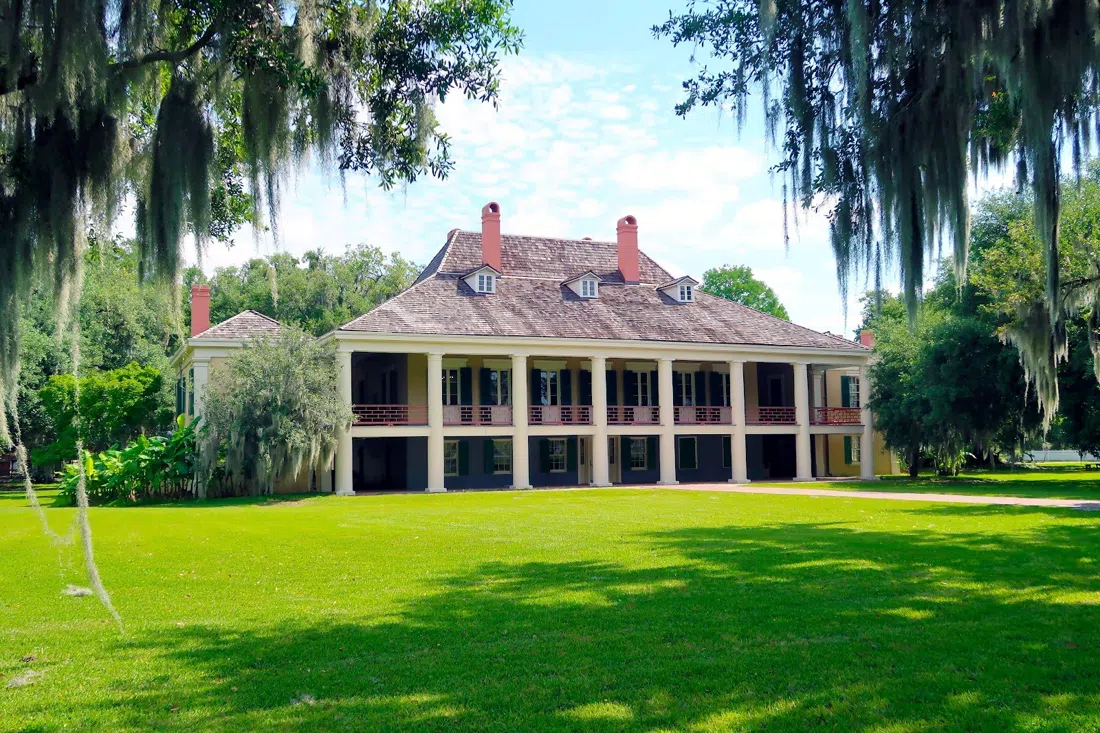
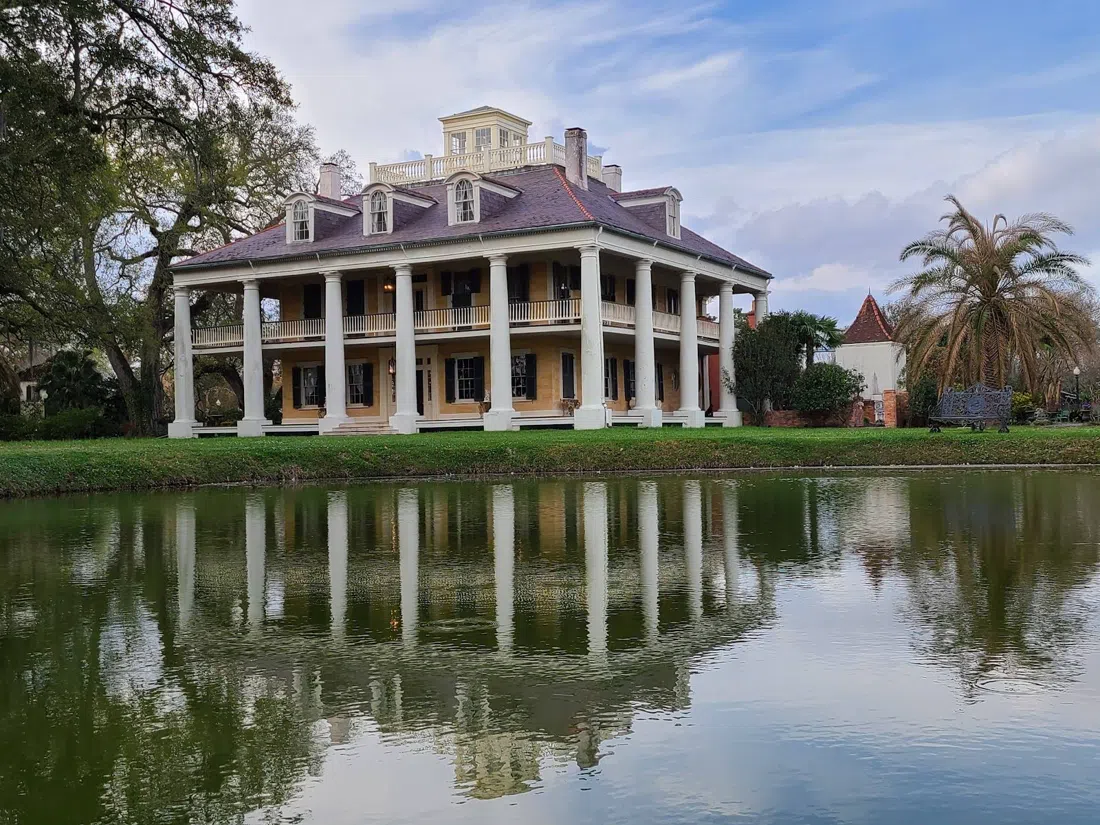
Fifty miles upriver from New Orleans the land goes flat and green, the road drops to two lanes along the foot of a grass levee, and every so often the white superstructure of a container ship slides past above the treeline with no water visible under it. St. Joseph Plantation, in Vacherie on the east bank, sits on the river side of that road behind a short avenue of oaks: a squat, wide, West Indies-style house on brick piers with a working cane field behind it. It is the rare one out here that never turned into a museum of itself. The same family has owned it since 1877 and still farms the sugarcane you can see from the gallery.
What St. Joseph actually is
This is a guided house tour on a working farm, not a heritage park. Tours leave hourly from 10am to 3pm, seven days a week, and run about an hour. The same ticket covers the Louisiana Sugarcane Museum on the property, which is small and worth twenty minutes if you want to understand what the field outside is actually for: the crop cycle, the grinding season, the machinery that replaced a labour system built on enslaved people.
At the door it is $24 plus tax for an adult, $22 for seniors, $17 with a college ID, and $8 for children aged 6 to 12. A combination ticket with the family's neighbouring Felicity property is $46 for an adult. Groups of ten or more get a published rate of $16 an adult, booked by phone on 225-265-4078, and groups are allowed to picnic under the oaks after the tour, which makes this one of the few sites on the road where a coach party can sit down and eat on the grounds rather than being moved along.
The tour itself is conversational. Guides work from the family's own records and the outbuildings that survive, and the interpretation covers both the household and the enslaved people whose labour built and ran it. It is neither a moonlight-and-magnolias performance nor a formal museum of slavery; if you want the second, that exists elsewhere on this stretch and is covered further down.
The hour you spend on the ground
You start outside. The house is raised, plain-faced and far less theatrical than its neighbours, which is the point: this is what a Creole sugar planter's house looked like before the Greek Revival money arrived. Inside, the rooms are furnished with family pieces and the guide moves you through at a steady pace. An hour is genuinely an hour, not a rushed thirty minutes. Afterwards you are free to walk the grounds, the detached kitchen and the surviving quarters buildings at your own speed, which is where most of the good photographs and most of the quiet are.
Because tours are hourly rather than every fifteen minutes, arrival timing matters more here than at the bigger sites. Turn up five minutes after the hour and you may be waiting fifty for the next one. Aim to be at the ticket window fifteen to twenty minutes before the hour you want. The 10am is the calmest of the day and the light on the front gallery is best early. The 3pm is the last, and if you take it you are leaving the property around 4pm, which closes off several lunch options and puts you into the return drive at the wrong end of the afternoon.
Why September is the last of the ordinary season
There is a hard seasonal edge here that catches people out. St. Joseph's October Mourning Tour, the house dressed for a period funeral with the interpretation reworked around nineteenth-century mourning customs, runs from 1 October to 3 November 2026. That means a September visit is the last of the ordinary-tour season: the standard house tour, the standard route, the standard hour. If you specifically want the plain historical tour rather than the seasonal one, September is your window. If you want the Mourning Tour, you are a fortnight early and should come back in October.
September weather is the trade-off. It is hot and humid, afternoon thunderstorms are routine, and almost all of the walking is outdoors and unshaded once you step off the gallery. That argues hard for a morning slot and for the kind of clothing you would wear to walk a field.
Tickets at the door and when to book ahead
For two people in a car, the door is fine. St. Joseph does not require a reservation for the standard tour, and on a September weekday the hourly departures absorb walk-ups without much drama. Ring ahead on the number above if you are a group of ten or more. That is both the cheaper rate and the only way to be sure the tour you want has room for all of you.
If you do not have a car, the practical route is a guided day trip out of the city, and those do exist for this stretch of the river. You will find the bookable options attached to this page rather than named in the text here. Two things are worth knowing before you compare them. They run seven days a week, so the day of the week is rarely the constraint. And they start from around 76 USD per person, which is roughly three times the door price of a single plantation: you are paying for the 100-mile round trip and a seat, not for a better tour. Across the bookable tours covering this stretch there are 2,268 traveller reviews, with the most-booked one rated 4.3 out of 5 from 1,824 of them, so the standard of the transport-plus-tour format is reasonably well documented.
One structural warning about the packaged option. Most of them are built around a different house on this road, with St. Joseph as the second stop or not at all. If St. Joseph specifically is what you came for, check that the itinerary names the house before you book.
Access, rules and the realities of the site
The house is raised on piers and reached by stairs. The ground floor, the grounds, the outbuildings and the sugarcane museum are flat and manageable, but the main-floor interior involves a staircase with no lift, so call ahead if that is a problem and ask what the guides can do. Surfaces are grass, gravel and brick. September ground is often soft after rain, and the insects are real. Long light trousers, closed shoes, water and repellent are not optional here in the way they would be in the city.
This is also a private working farm, so the field edges are not a footpath. Stay on the marked ground, and expect agricultural traffic on the road outside.
Is it worth it
Yes, with one condition: you have to want the quieter, smaller, more domestic version of this story. St. Joseph is the best-value serious house tour on the road (a full hour, a museum included, $24 at the door) and the least stage-managed. If your image of a River Road day is the famous oak tunnel and a grand columned facade, you will find St. Joseph plain and may feel short-changed.
It suits couples, solo travellers and anyone who prefers a guide who will answer a difficult question properly. It suits groups of ten or more unusually well, because of the rate and the picnic. It suits families with children old enough to walk an hour outdoors in heat. It does not suit anyone on a tight schedule who cannot align with an hourly departure, and it should not be the only plantation you visit if you want the full picture. Pair it, always, with the counterweight below.
Three and a half miles up the road
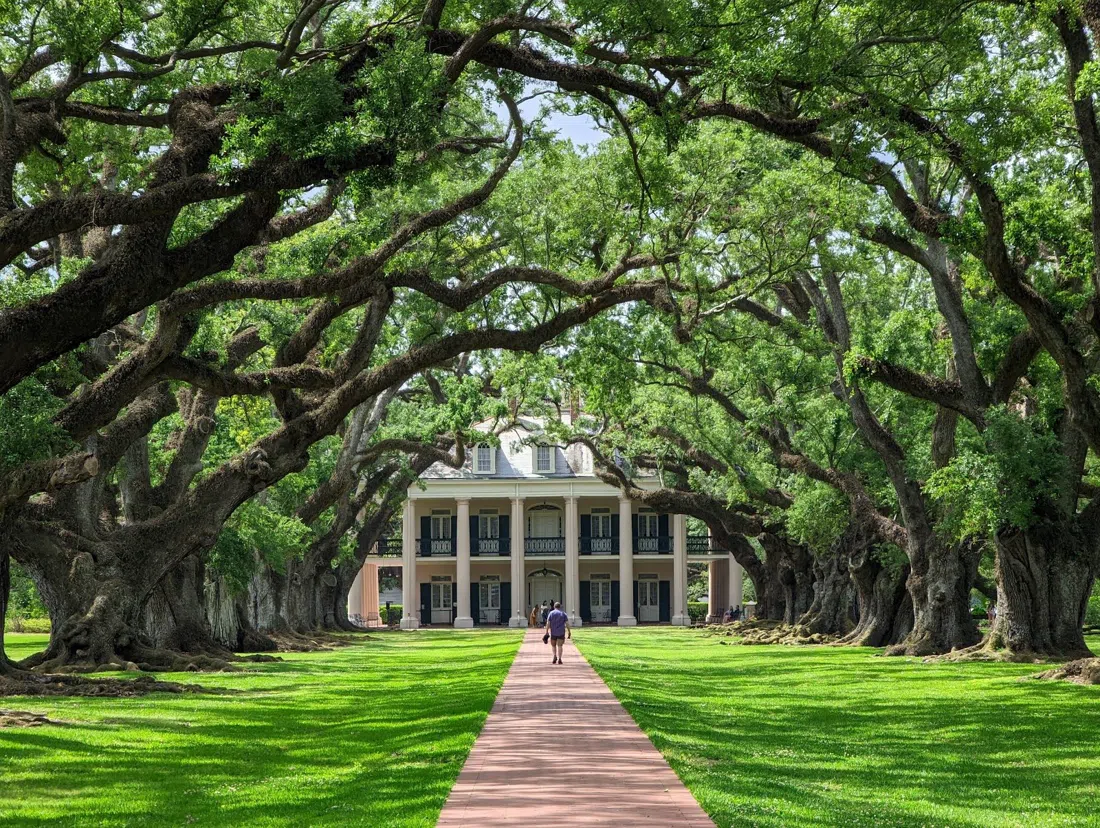
Oak Alley Plantation (Vacherie, straight up LA-18) is the obvious pairing and the one everyone photographs. Tickets are $30 and up with the Big House exhibit, $27 and up without, with discounts for seniors 65+, military and AAA. Two facts change how you plan it: the Big House tour runs only about thirty minutes, and you check in thirty minutes before an assigned time slot handed to you at the ticket desk. Early arrival is rewarded far more than it is at St. Joseph. Arrive late on a busy day and you will be given a slot an hour or two out, which is dead time. Large coach groups are routine here and get split across slots, so a party of twenty should not expect to stay together.
Laura and the Creole record
Laura Plantation (Vacherie, a couple of minutes from St. Joseph) is the closest thing to a rival on storytelling: a 75-minute tour built out of the Creole family's own documents rather than general period colour. Adults are $25, teenagers 13 to 17 are $15, children 6 to 12 are $10, and groups of twenty or more have a published $18 rate. Otherwise it is first-come, first-served, so the same early-arrival logic applies. It is the only site on this stretch running daily tours in French as well as English, at 11am, 1pm and 3pm, which is genuinely useful if French is your first language and a different experience if it is your second.
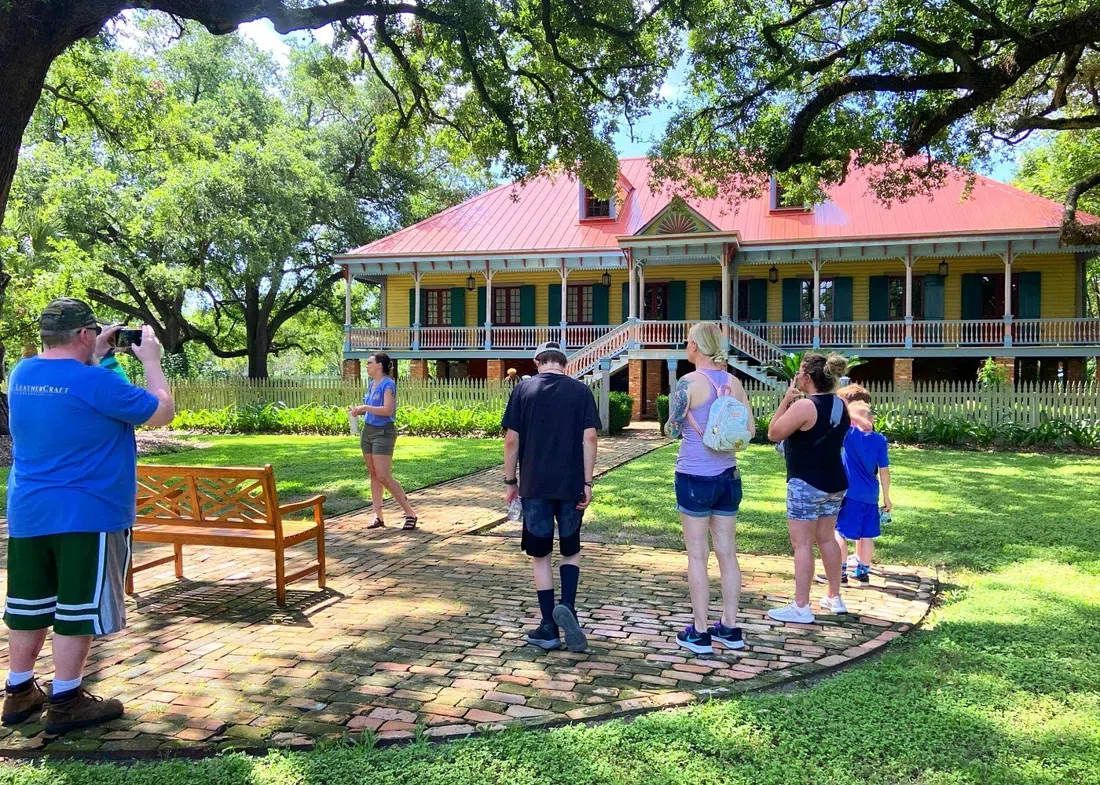
St. Joseph and Laura together make a strong half-day. St. Joseph and Oak Alley make a more photogenic one.
The harder ground across the river
Whitney Plantation (Wallace, over the Veterans Memorial Bridge) is the essential counterweight and the one to build the day around if you only do two stops. It is a museum of slavery, told entirely from the perspective of the enslaved, with a free app-based audio tour included in admission of roughly $30, reduced if you book online. Timed entry reservations are recommended, it is closed on Tuesdays, last entry is 3pm, and it needs a full two hours. Do not try to bolt it on to the end of a long day. It deserves a fresh head.
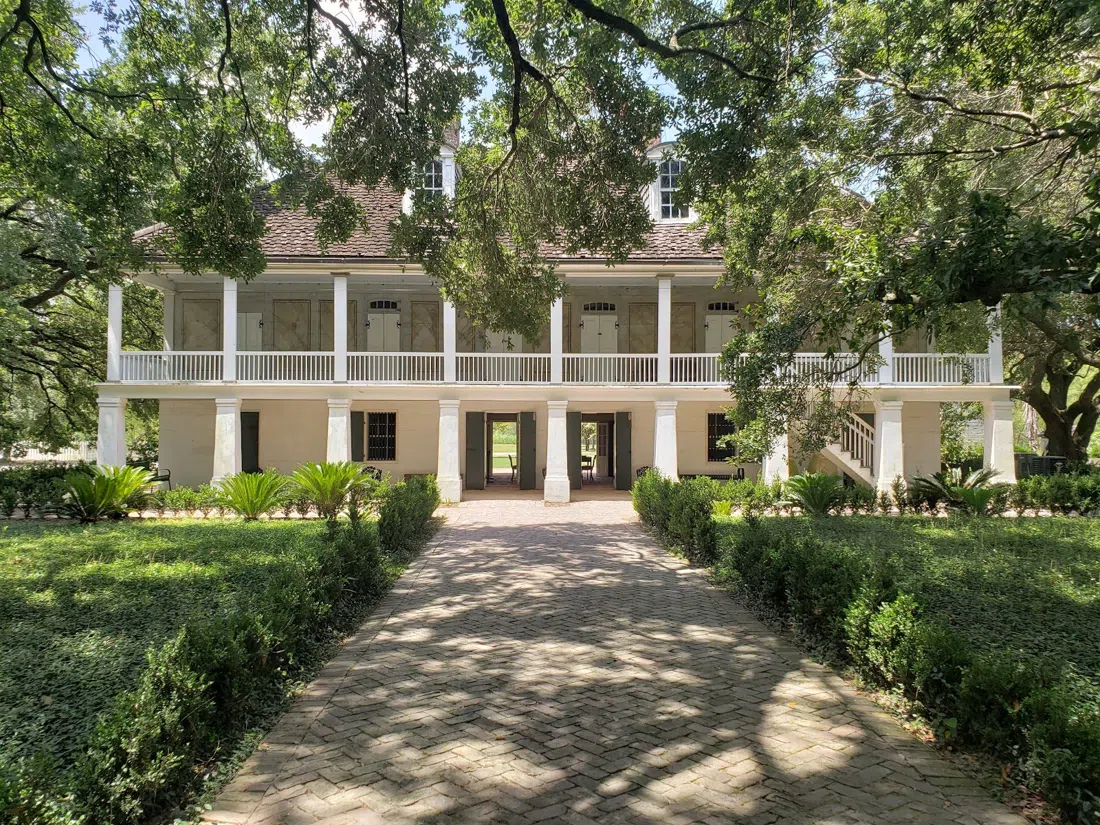
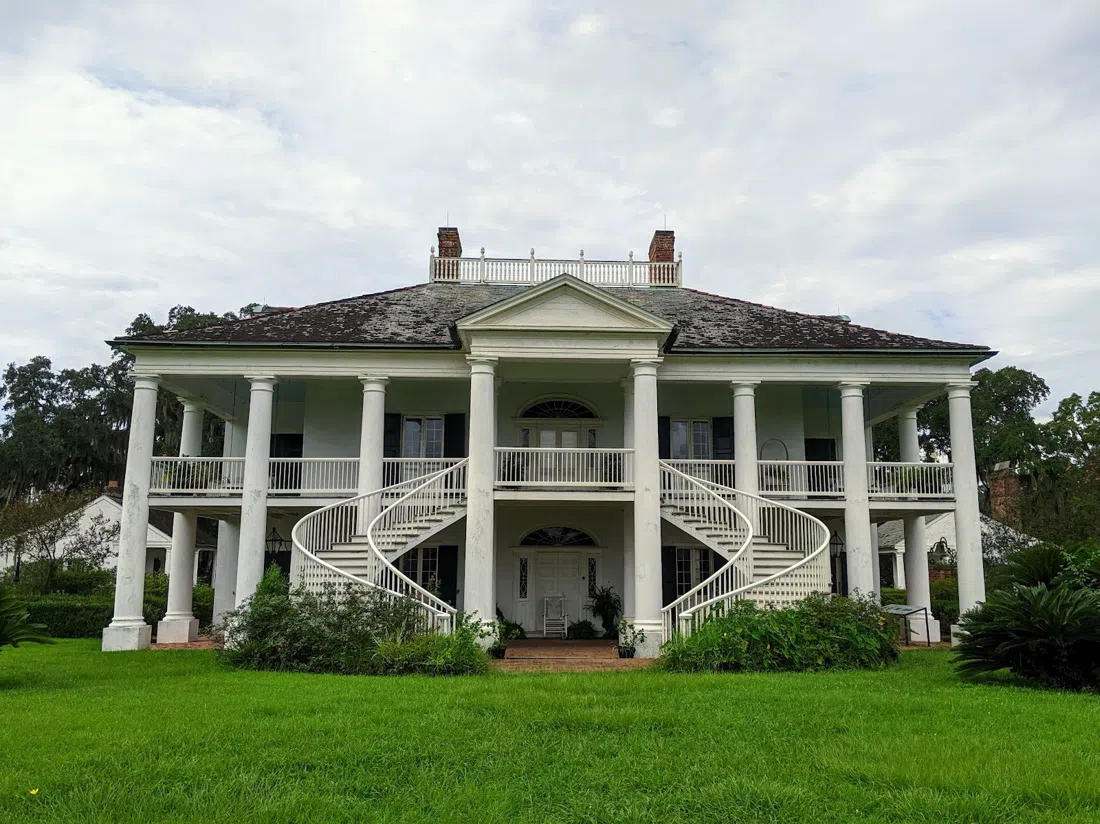
Evergreen Plantation (Edgard, west bank) is the one that catches people out. It is the most intact plantation complex in the South (37 buildings on the National Register, including 22 original cabins standing in their double row), but it is strictly by reservation, with tours at 9:30am, 11:15am, 1pm and 2:45pm, no walk-ups, around $30 an adult, and it is closed on Sundays. Decide about Evergreen before you leave the city, not on the road.
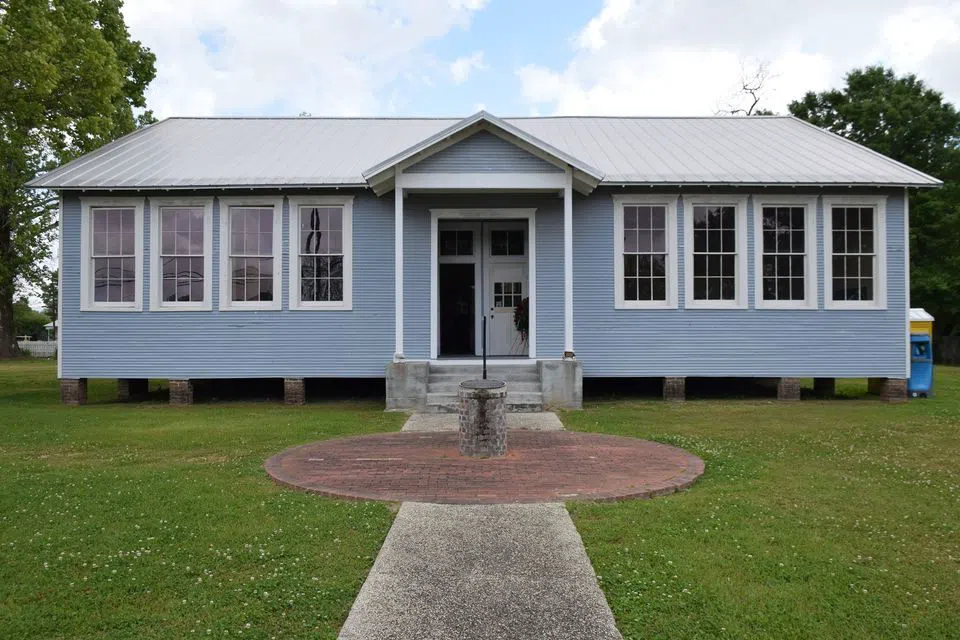
River Road African American Museum (Donaldsonville, upriver) is the community-run archive of Black life along this stretch, and it fills the gaps a house tour inevitably leaves. Admission is around $10, children a few dollars. It is closed Monday and Tuesday and open 10am to 5pm Wednesday to Saturday, and the building is modest, so call ahead for anything over about fifteen people.
Eating on the River Road
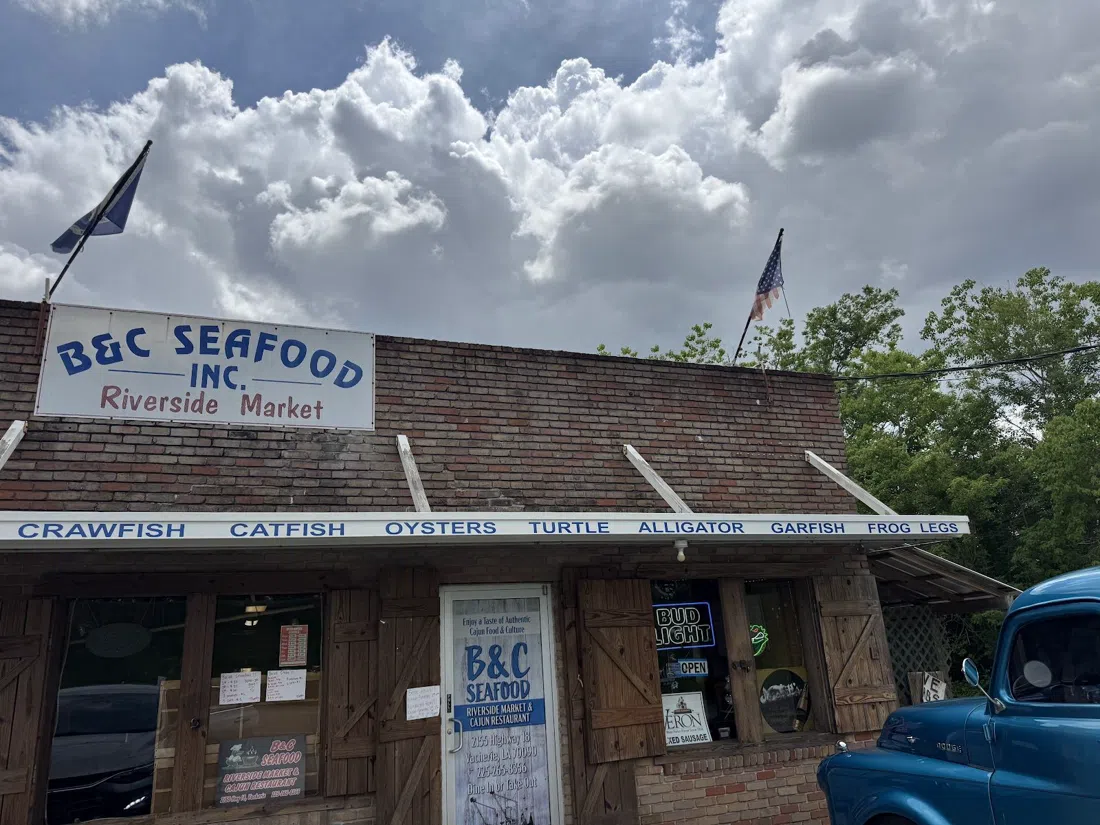
B&C Seafood Riverside Market & Cajun Restaurant (Vacherie, between Laura and Oak Alley) is the default lunch stop, $12 to $25 a head, part market and part dining room. Two hard constraints: it shuts at 4pm and it is closed on Sundays, which is exactly what ruins a late-afternoon tour plan. The room is tiny, so coach parties must ring ahead on 225-265-8356.
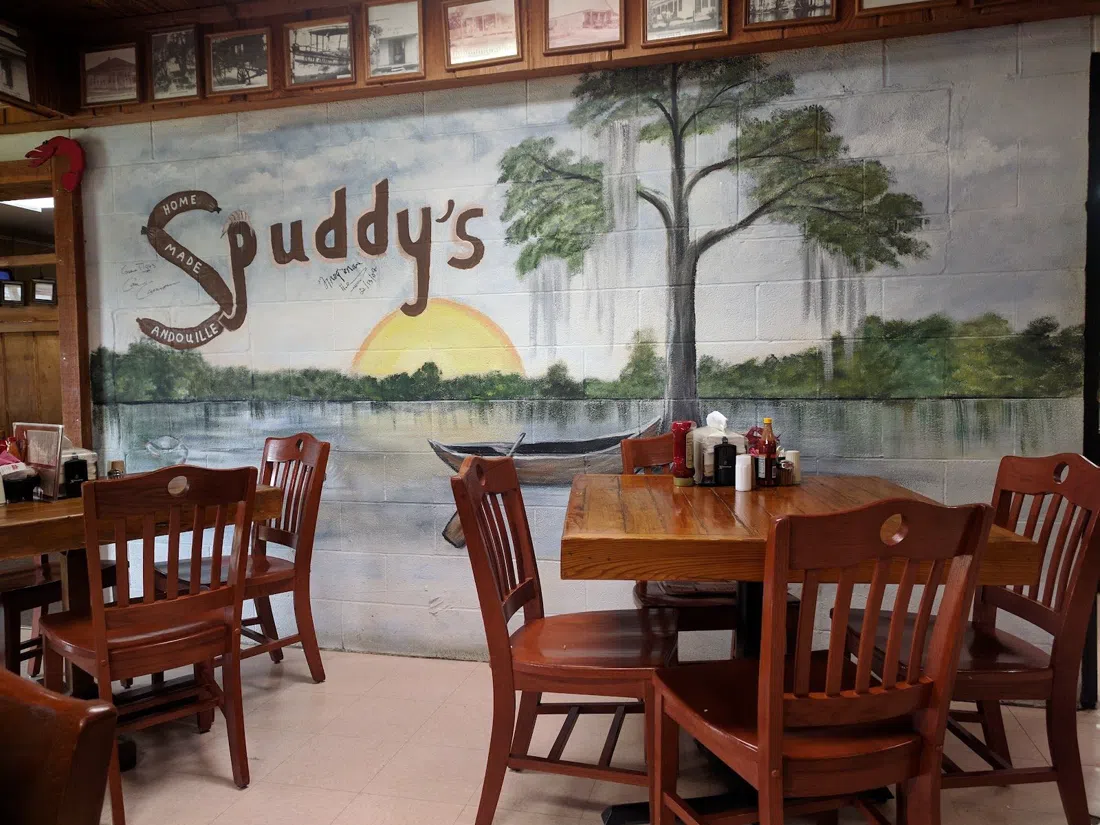
Spuddy's Cajun Foods & Cajun Cooking Experience (Vacherie, minutes from St. Joseph) is the best hands-on thing out here: a three-hour class that ends in a shared meal, roughly $85 to $110, built for groups. It runs only on fixed scheduled dates (18 September, then 2 and 16 October 2026 among them) and you book on 225-806-1710. The shop, for boudin and andouille to take away, opens only Friday and Saturday.
Wayne Jacob's Smokehouse and Restaurant (LaPlace) has been smoking andouille since 1950 in the town that claims to have invented it, $12 to $22 a head. It is a natural first or last stop on the I-10 run, but the dining room is compact and lunch is served only 11am to 2pm, Monday to Friday.
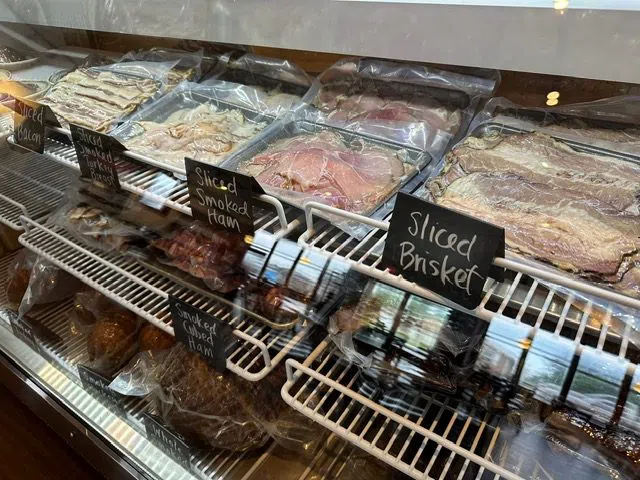
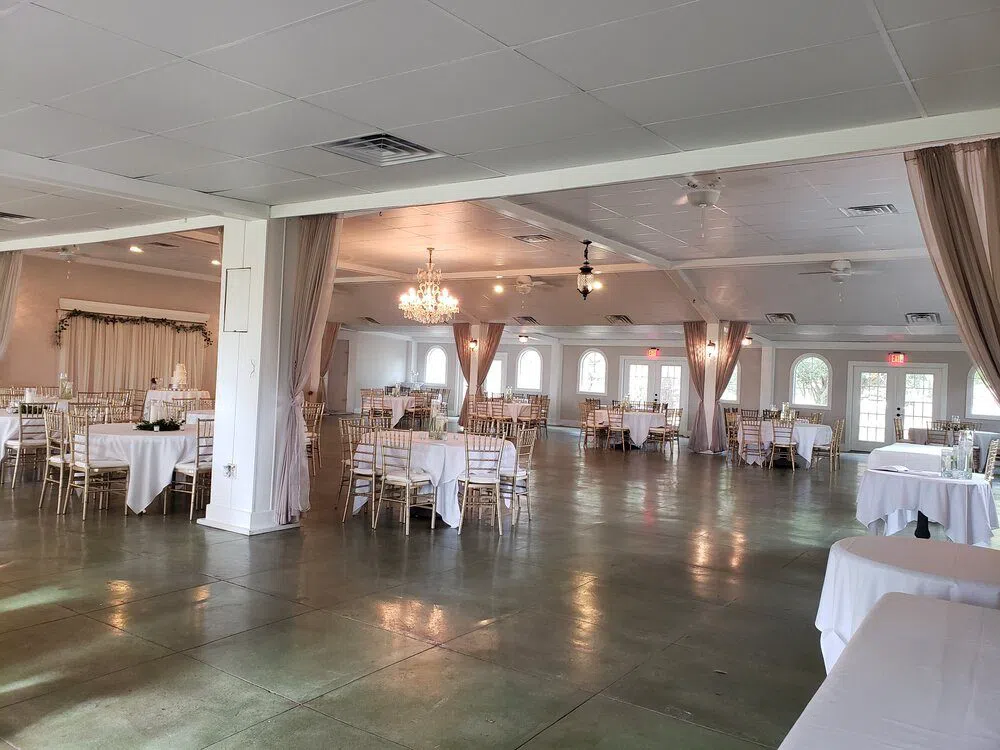
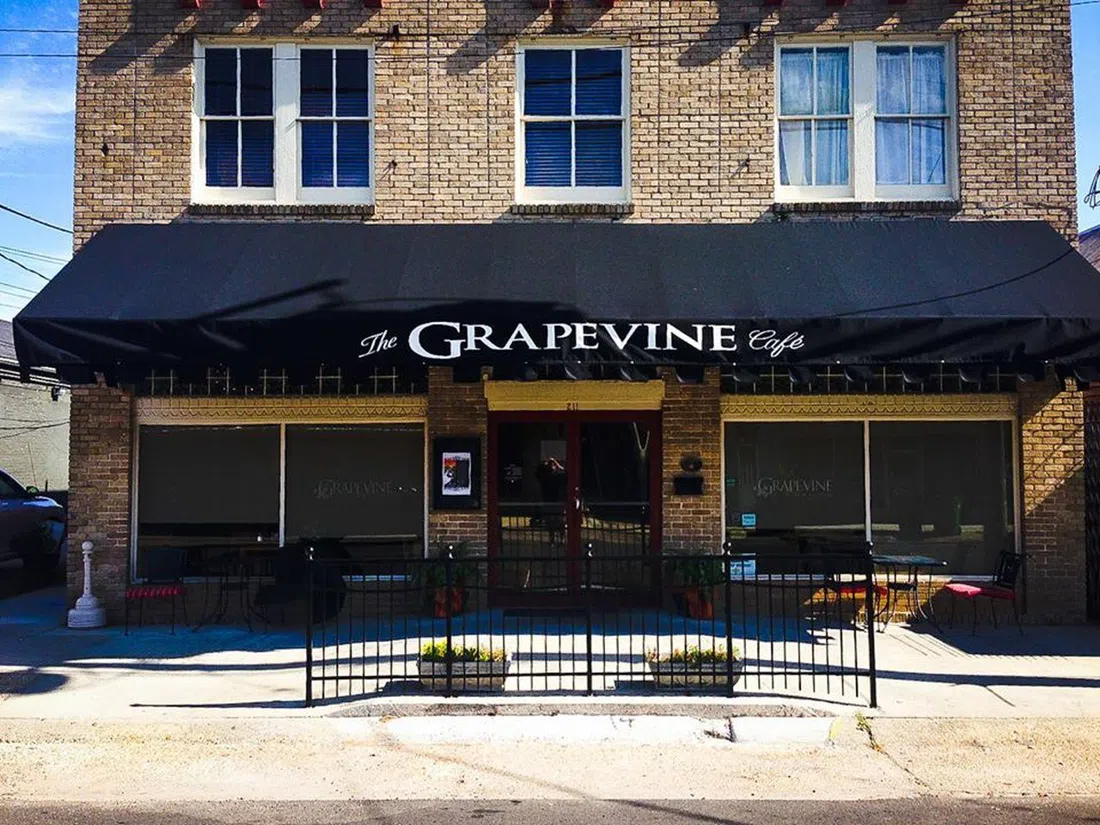
For a proper sit-down dinner, Grapevine Cafe & Gallery (Donaldsonville, in the historic centre near the museum) does $20 to $40 a head in a larger room that handles parties. Book ahead for evenings, and note it is closed all day Monday and lunch-only on Sundays. Ormond Manor (Destrehan, on the way back to the city) is the other option, listed until recently as Ormond Plantation: house tours by appointment only, restaurant seating groups Tuesday to Friday, lunch around $20 and dinner $35 to $55. It is shut Monday, Saturday and Sunday, so check before you build a day around it.
The stops between the city and the cane
Destrehan Plantation (Destrehan, about 25 minutes out of New Orleans) is the easy add-on at either end of the drive. Tours run every thirty minutes from 9:30am, admission is $27 adult, $25 for seniors 60+ and active military, $16 for children 7 to 17 and free under 6, and craft demonstrations are included. Photography is allowed; video and audio recording are not.
Cajun Pride Swamp Tours (Frenier Road, LaPlace) is the standard pairing with a plantation day and sits roughly halfway between the city and Vacherie. Four departures (9:30am, 12pm, 2:15pm and 4:15pm) at around $30 for the boat alone, more if you want transport from town, and you need to arrive fifteen minutes early. The 4:15pm slot runs only until 31 October, so September still has the late option: a 10am tour at St. Joseph, lunch, and the last boat of the day is a clean, unhurried sequence.

Houmas House Estate and Gardens (Darrow, upriver) is the natural last stop if you leave St. Joseph mid-afternoon, because it is the only site on this stretch open until 7pm daily. Tours run hourly and half-hourly from 9:30am, at $35 for the mansion and gardens, $25 for teenagers, $15 for children 6 to 12, or $20 for gardens only. Several restaurants on site make it large-group friendly, and the late closing is the only way to see any of this in evening light.
Best time to go
Go on a weekday morning. The 10am tour at St. Joseph is the least crowded hour of the week in September, the heat is survivable until about eleven, and it leaves the whole afternoon for a second site. Weekends bring more coach traffic to Oak Alley and Whitney. Tuesday rules out Whitney entirely, Sunday rules out Evergreen and B&C Seafood, and Monday closes both Donaldsonville options.
Within September, the second half of the month is marginally cooler and is the final stretch before the house switches to its October programme on the 1st. Build in a storm contingency: an afternoon downpour is normal, and the indoor hour at St. Joseph, the sugarcane museum and Whitney's covered exhibits all work in rain, while the swamp boat and the Oak Alley grounds do not.
If you are choosing a base rather than a day, the city is still the right one; see the New Orleans guide for how the districts differ before you pick.
Planning the day
Drive if you can. It is about an hour from the city to Vacherie on I-10 and LA-3127, or slower and prettier along the River Road itself, and a car is the only way to combine three sites without surrendering your schedule. Fuel up before you turn off the interstate; stations thin out fast. Without a car, take a guided day trip and accept the fixed itinerary.
Budget roughly $24 to $30 per adult per site, $12 to $25 for lunch, and a tank of fuel, so call it $80 to $110 a head for a two-plantation day with a meal, or from 76 USD per person for a seat on a guided run. Carry some cash for the smaller places; the museum and the market-style kitchens are simpler with it. Phone signal is patchy along the levee, so screenshot your reservations before you leave.
A workable September shape: 10am at St. Joseph, lunch at B&C before it shuts, Whitney or Laura in the early afternoon, and either the 4:15pm swamp boat or Houmas House for the last of the light. Anything more than three stops turns the day into a car park tour. For somewhere to come back to afterwards, start with the New Orleans hotel search and pick a base near a streetcar line so the drive out is the only driving you do.