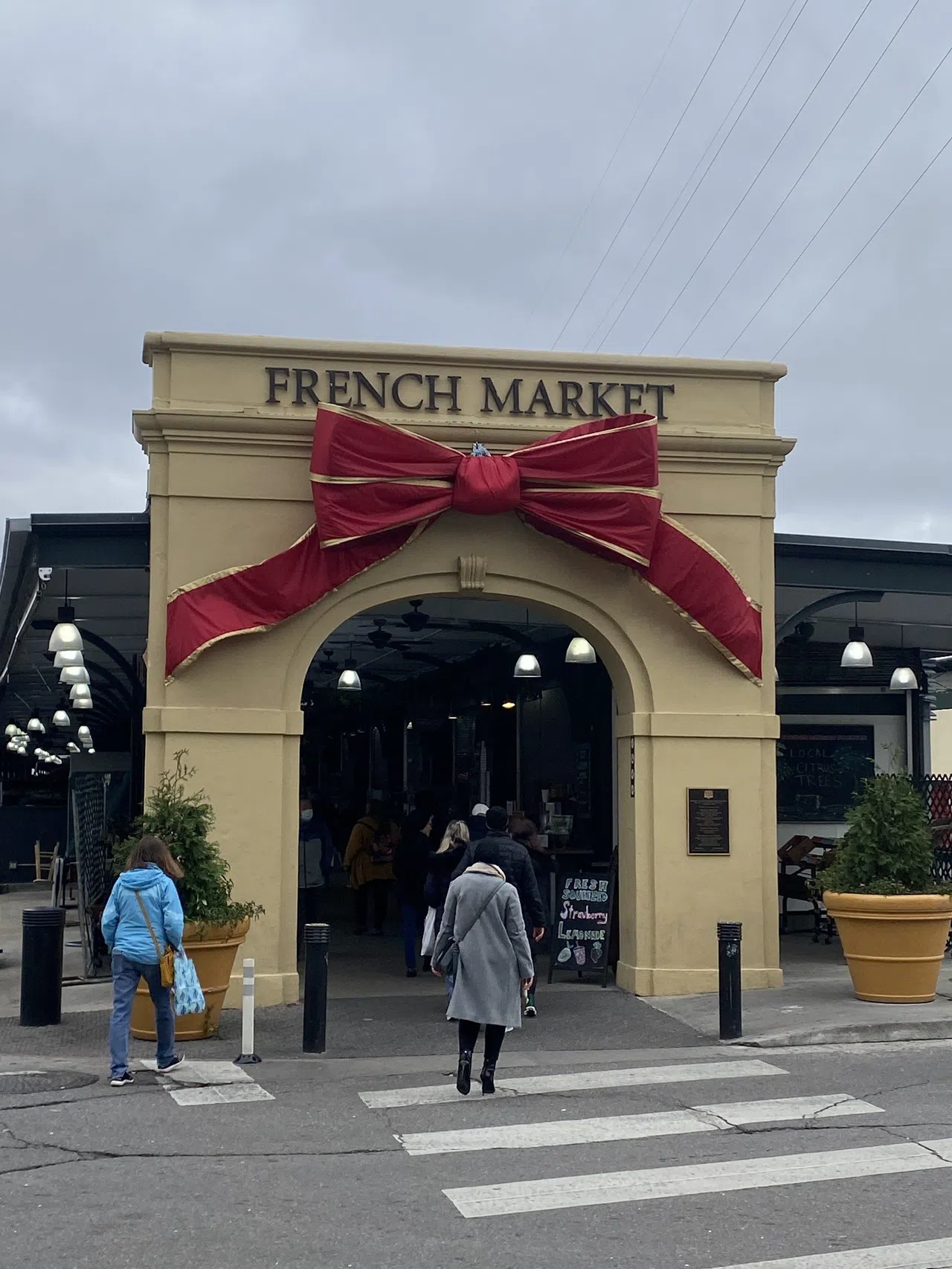

Powdered sugar gets everywhere. It is on the colonnade rail, on the shoulder of the man selling alligator-head keyrings, on your own sleeve before you have settled on what you actually want to eat. The French Market runs roughly five blocks along the river, from a coffee stand that barely closes to a mint that once struck coins. It is not one market but three bolted together, a café, a craft market and a souvenir bazaar, and they do not deserve equal shares of your morning.
What you are actually walking through
The French Market (French Quarter, the riverside strip between Decatur and N. Peters) is the oldest continuously operating public market site in North America, and it still trades every day of the year. It is free, unticketed and has no gate, which is why every commercial food walk in the city routes through it. On a good morning a guide with twelve to sixteen people in tow will overtake you, all clutching the same paper napkin.
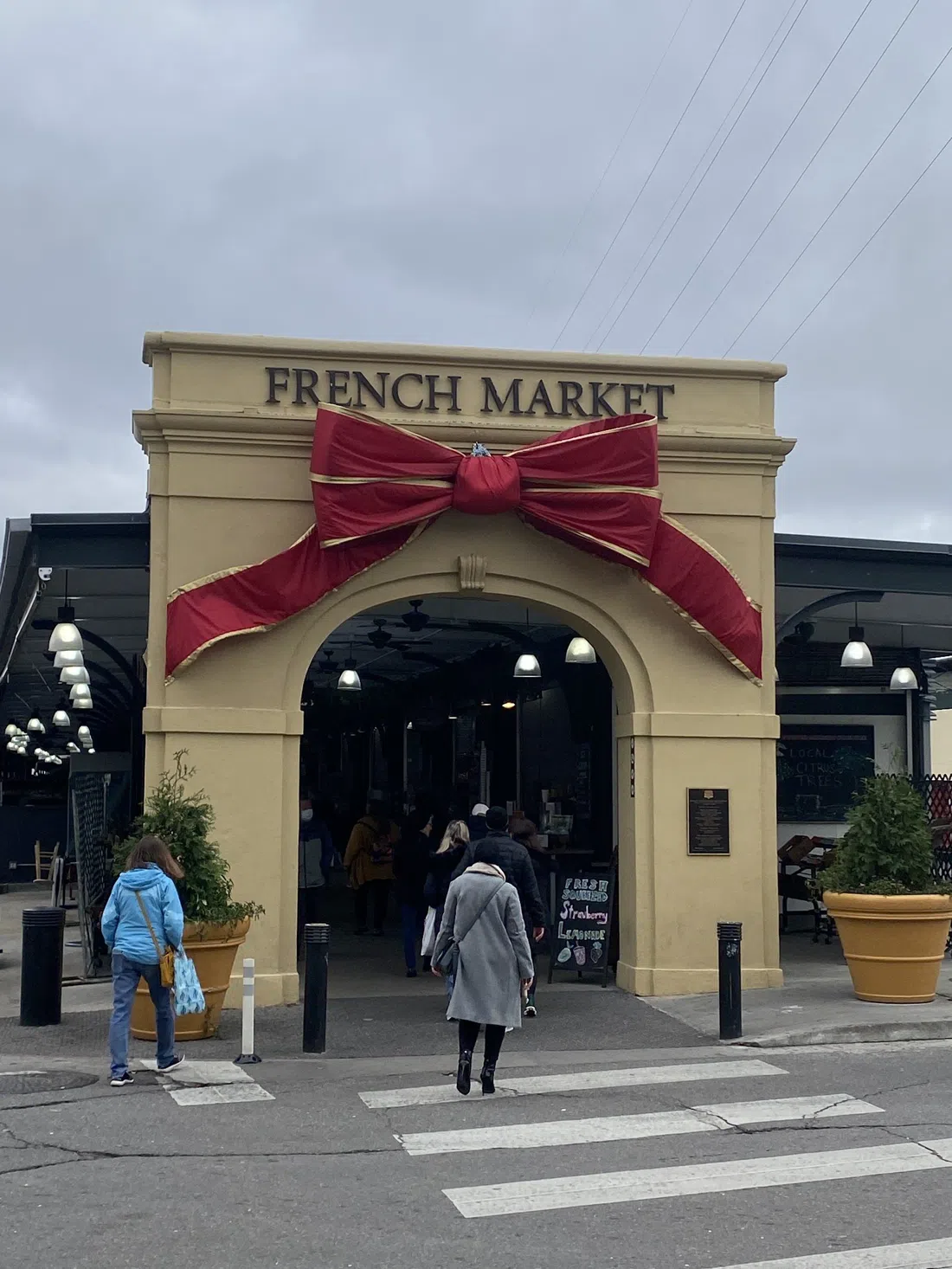
Physically it is a chain of open-sided sheds under a long colonnade. The upriver end starts a block from Jackson Square; the downriver end stops at the Old U.S. Mint on Esplanade. Walking it without stopping takes about twelve minutes. The retail stalls keep 10am to 5pm; the farmers-market and eateries end runs to 6pm. A lot of visitors arrive at half past five and find shutters.
The two halves are not equal. The downriver flea end is heavily souvenir-led (sunglasses, feather masks, screen-printed T-shirts, phone cases, incense) and largely interchangeable with airport retail anywhere. The real local craft and the food sit at the Dutch Alley end. If you only have an hour, spend it upriver and treat the flea sheds as the walk back.
The beignet question
Café du Monde — French Market (French Quarter, Decatur at St. Ann) is the single most queued thing on the whole strip and the source of nearly every question travellers ask before they arrive. The order is three beignets for about $4.50: square, yeast-raised, no hole, fried to order and buried under a drift of powdered sugar, with a café au lait cut with chicory for roughly the same. Eat them inside four minutes, while the inside is still steam. Do not inhale on the first bite.

There are no reservations and no group bookings. You queue, you claim a table, you wave at a server. If you are in a party of eight, split across two or three tables rather than waiting for a phantom long one. The fix for the crowd is the separate to-go window on the Decatur side, which moves at a different pace entirely, and the clock: arrive before about 9am or after 9pm and you walk straight in. Mid-morning, between roughly 10am and 1pm, is when the line wraps. It opens at 7:15am and runs to 11pm, later on Friday and Saturday, so the late slot is a real option.
The food worth crossing the colonnade for
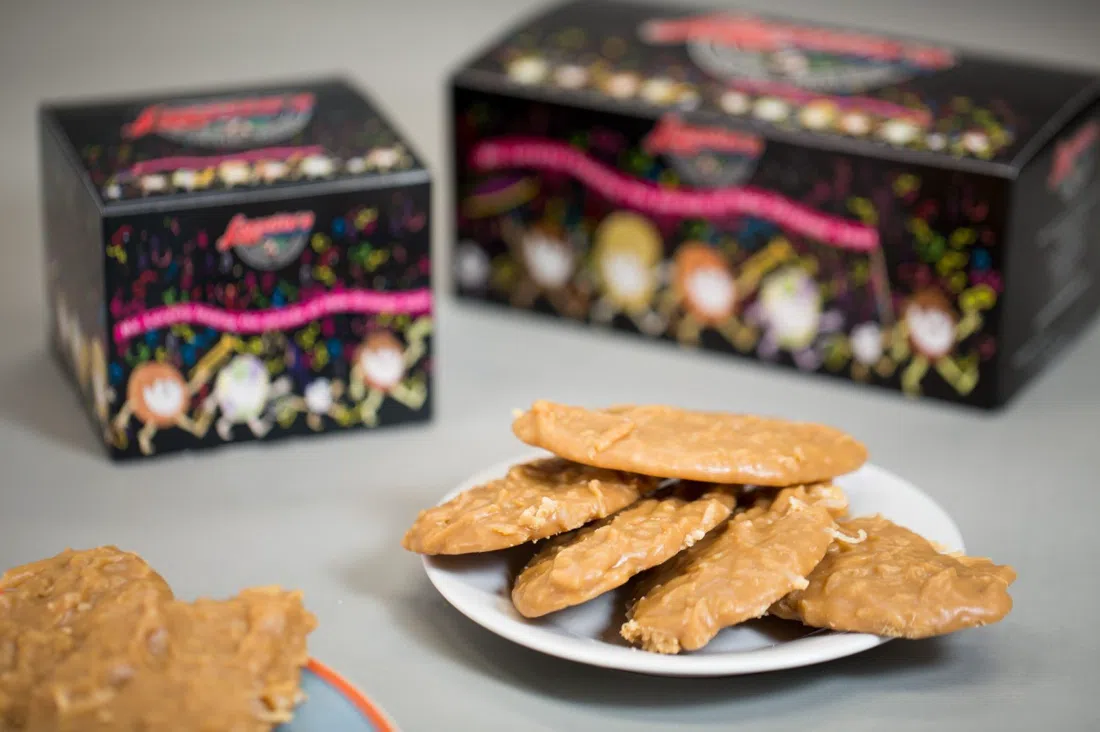
Loretta's Authentic Pralines — French Market (French Quarter, Dutch Alley end) is a walk-up stall with no seating of its own, so you order and eat at the market's communal tables, and it handles tour-group volume without blinking. Loretta Harrison was the first Black woman to own and run a praline business in New Orleans, and the shop still trades under her name. Pralines run a few dollars each; the beignets are under $10. Order the praline-stuffed beignet, because it is the one thing on this strip you cannot get at Café du Monde: the same fried dough, split and filled with the brown-sugar-and-pecan paste that a praline is before it sets.
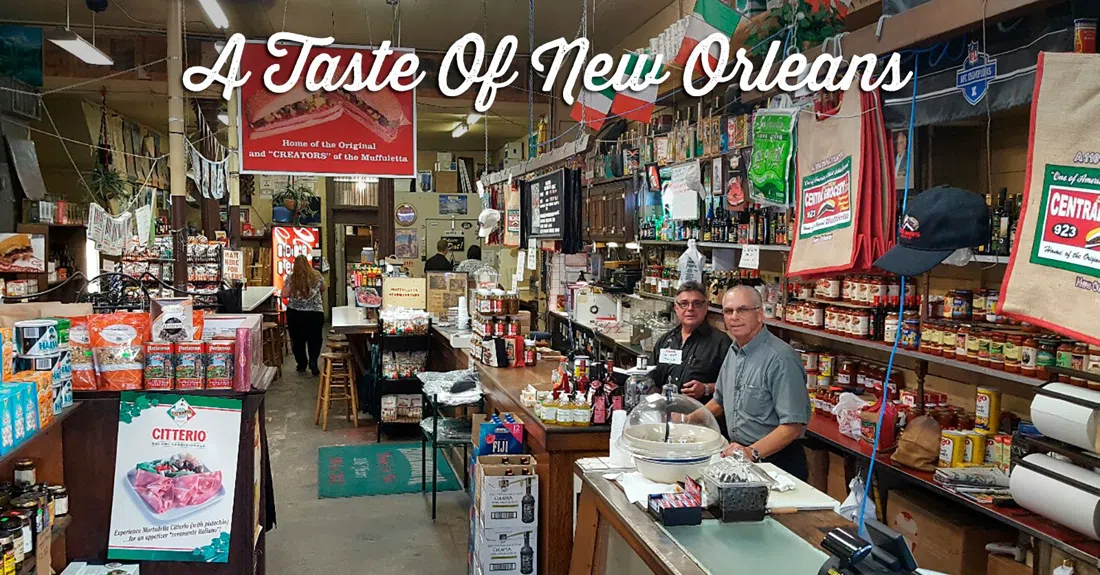
Central Grocery & Deli (French Quarter, Decatur across from the sheds) invented the muffuletta in 1906 for Sicilian farmers who were already buying their bread, meat and olives there separately. The sandwich is a round seeded loaf layered with mortadella, salami, ham, provolone and mozzarella, and what makes it is the olive salad (chopped green and black olives, cauliflower, celery, garlic, oregano, oil), which soaks down into the crumb while it sits. A half is roughly $10 to $12, a whole in the low $20s and feeds two to three people. It reopened in 2022 after three years shut following hurricane roof damage; plenty of older articles still list it as closed. Counter service only, tiny interior, takeaway-led: send a group in one or two at a time, buy a half, and eat it on the river wall rather than hovering. Open 9am to 5pm daily, and it sells out of loaves on busy afternoons.
Meals from the Heart Café (French Quarter, inside the market sheds) answers the complaint international visitors make most often about eating here, which is that the local canon appears to be built entirely from butter, roux and shellfish. Chef Marilyn Doucette's kitchen cooks vegan, gluten-free and allergy-safe versions of gumbo, crab cakes and beignets alongside the traditional ones, and does it as cooking rather than as substitution. Mains are roughly $12 to $20. It is a small counter with shared market seating: fine for six, and larger parties should ring ahead to pre-order. Open 10am to 4pm on weekdays, to 5pm at weekends.

Aunt Sally's Praline Shop (French Quarter, on the market strip) has been making pralines daily since 1935 and keeps 8am to 8pm, the longest hours of anything in the district. That makes it the reliable fallback when the sheds have shut at 5 or 6 and someone in your party still wants the edible souvenir. Pralines are a few dollars; gift tins run $15 to $35. It is large, open-plan and used to coach traffic, so it is also the fastest way to move a big group through a purchase.

Where to sit down
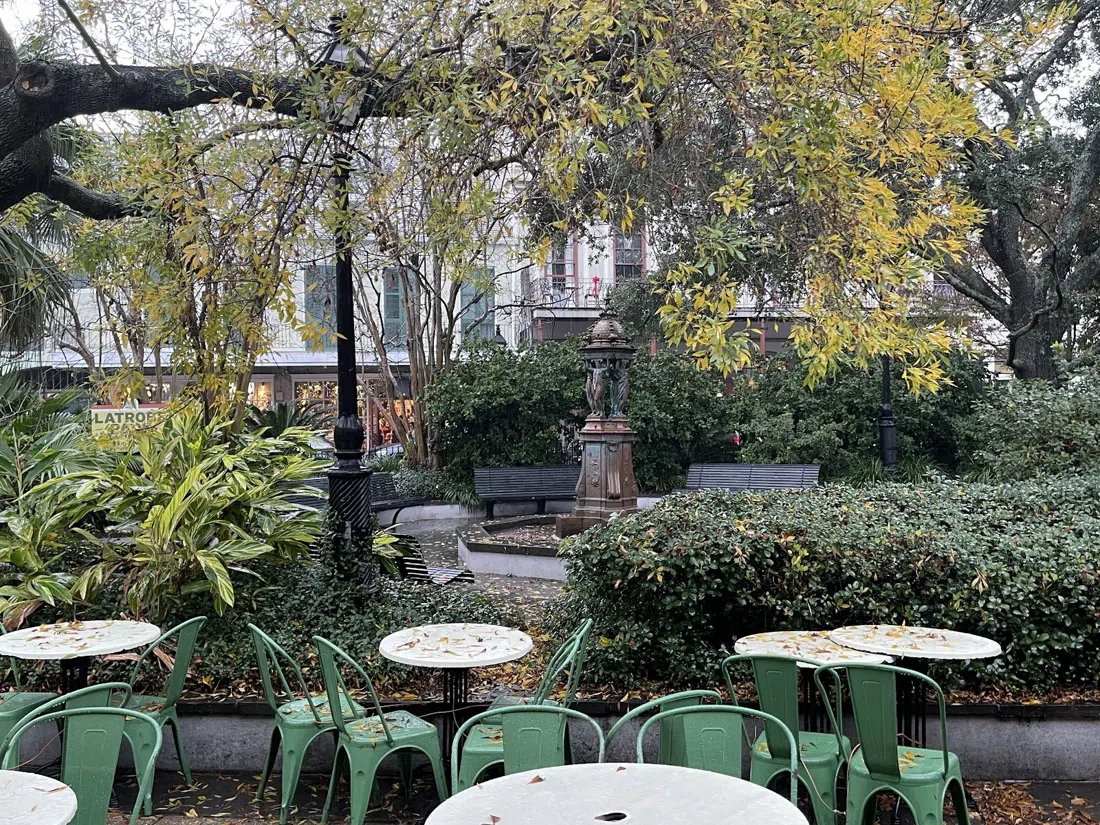
The Gazebo Café (French Quarter, at the market's edge) is the easiest place in the immediate area to put eight to twelve people at a table with music playing. The courtyard seating absorbs groups, and there is free live jazz on the patio through the afternoon with no cover and no minimum. Small plates and sandwiches run roughly $14 to $22, drinks $10 to $14. It has become the practical replacement for the Palm Court Jazz Café a block downriver, which closed permanently in June 2024.
The Original French Market Restaurant & Bar (French Quarter, directly opposite the sheds) is the sit-down counterweight to all the stand-up food. Full-service Creole seafood, mains roughly $20 to $35, reservations taken and larger parties handled. It is realistically the only sensible option for a group of ten or more right on the market. It runs 11am to 10 or 11pm, which fills the long evening gap after the sheds close.

Shopping that is not a fridge magnet
Dutch Alley Artist's Co-op (French Quarter, upriver end of the market) is where the craft is real. Twenty-five regional artists own and staff it themselves, so several are usually on the floor and you are buying direct from the person who made the thing. Prints start around $25 and originals climb into the hundreds. Free to browse, 10am to 6pm daily. Treat it as a working gallery, not a tour stop; guides tend to pause outside and let people drift in, which is the right instinct.

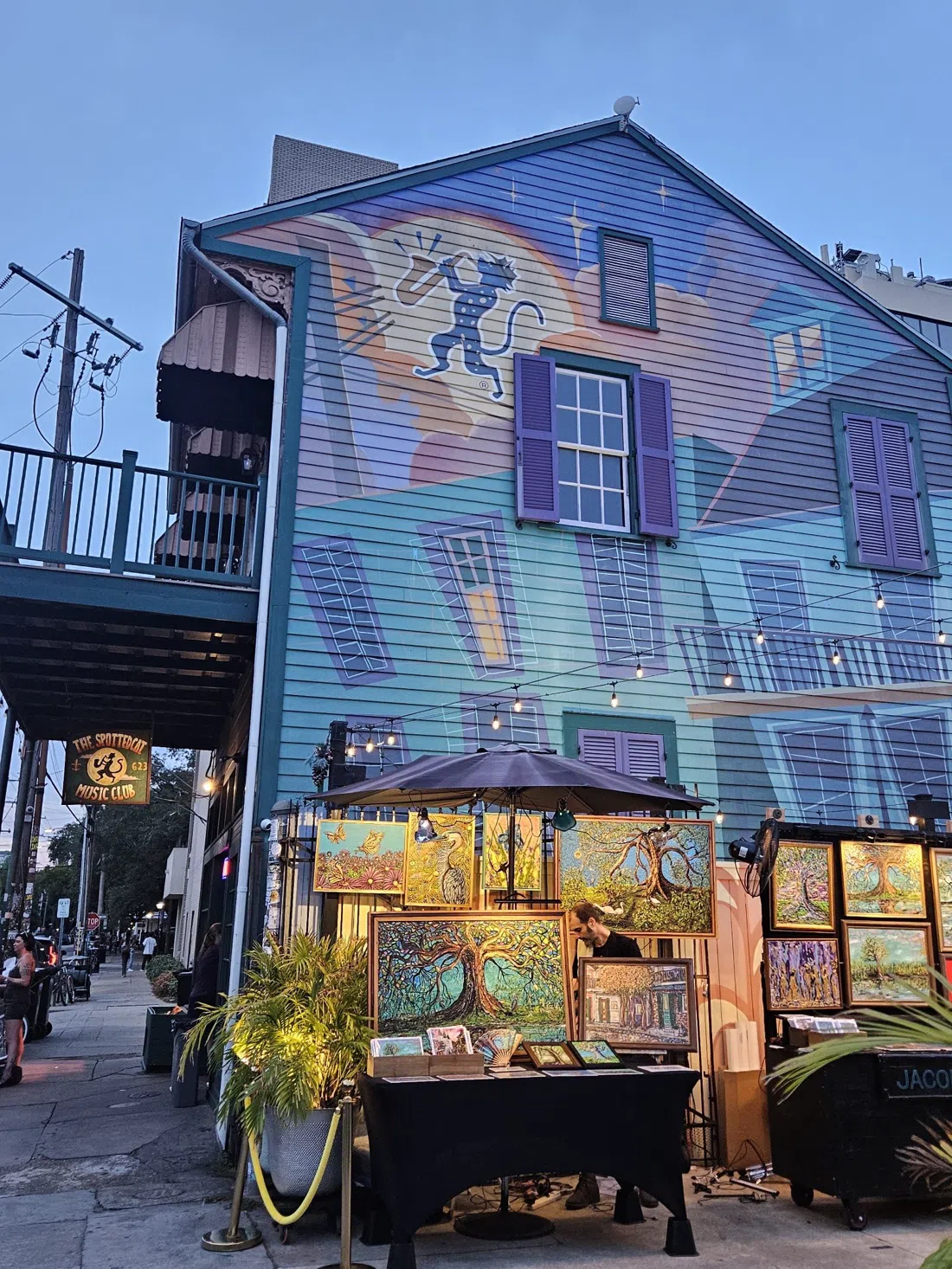
If you want a market that trades after dark, Frenchmen Art Bazaar (Faubourg Marigny, ten minutes downriver on foot) picks up exactly where the French Market's 5pm and 6pm closes leave off. It runs 7pm to midnight daily, free and open air, with prints and jewellery mostly $20 to $80. The lot is narrow, so a large party should expect to filter through in twos and threes rather than sweep down it together.
How long the walk takes
Twelve minutes end to end at pace, forty-five with a proper look at the sheds. Two to three hours is the realistic figure once you have queued for beignets, eaten them, browsed Dutch Alley and bought something. Half a day if you add the Mint and the convent, which is the version I would actually plan for.
What it costs at the door and what a guided walk adds
The market itself has no door price and no ticket; you walk in. Doing it yourself costs whatever you eat, which for one person is realistically $20 to $30 with beignets, a half muffuletta and a praline. Guided food walks through the Quarter and the market start from 82 USD per person, and what that buys is tasting portions at several counters in sequence, the history told properly, and someone else holding the table while you eat. Across the bookable walks here there are 19,825 traveller reviews, and the top-rated one holds 4.8 out of 5 from 6,689 of them, so the format works for the people who take it. If you want a specific departure, book ahead rather than turning up: some departures of that top walk are already fully sold out on 2026-11-26, though other dates remain bookable.
Skip the guided version if you are a confident eater on a budget, if you have dietary restrictions you would rather handle at a counter yourself, or if you have already read this far. The route is five blocks long and does not require a navigator.
Access and rules
The sheds are flat, paved and step-free, and the colonnade roof covers you in both a downpour and full sun. There is no bag check, no ticket and no dress code anywhere on the market.
The New Orleans Jazz Museum at the Old U.S. Mint (French Quarter, Esplanade end) is the accessible anchor at the downriver end: ramped entrance on Esplanade and lifts to every floor. Entry is $6 for adults, $5 for students, seniors and military, free under six, and it holds Louis Armstrong's first cornet. It is closed Mondays and otherwise open Tuesday to Sunday, 9am to 4pm, which catches out a lot of people who assume the market's 365-day hours apply to everything around it.
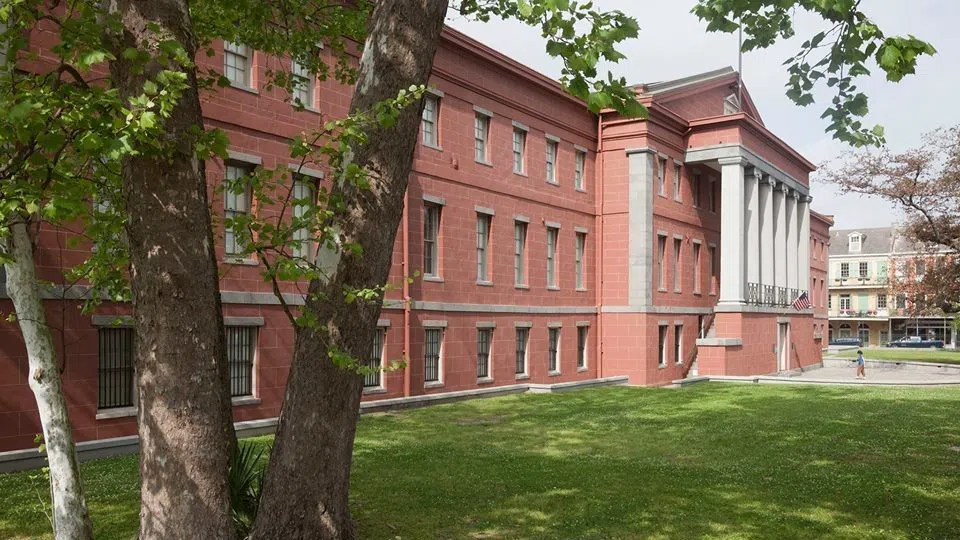
The Old Ursuline Convent Museum (French Quarter, two streets back from the sheds) is the oldest surviving building in the Mississippi Valley and is almost always quiet while Jackson Square is heaving, which makes it the single best queue-free swap on a crowded afternoon. Entry is $10 adults, $9 seniors, $7 students and military, self-guided with docent tours subject to availability. The rooms are small, so book ahead for groups above about ten. Closed Sunday and Monday, open 10am to 3pm otherwise.
Where the walk goes next
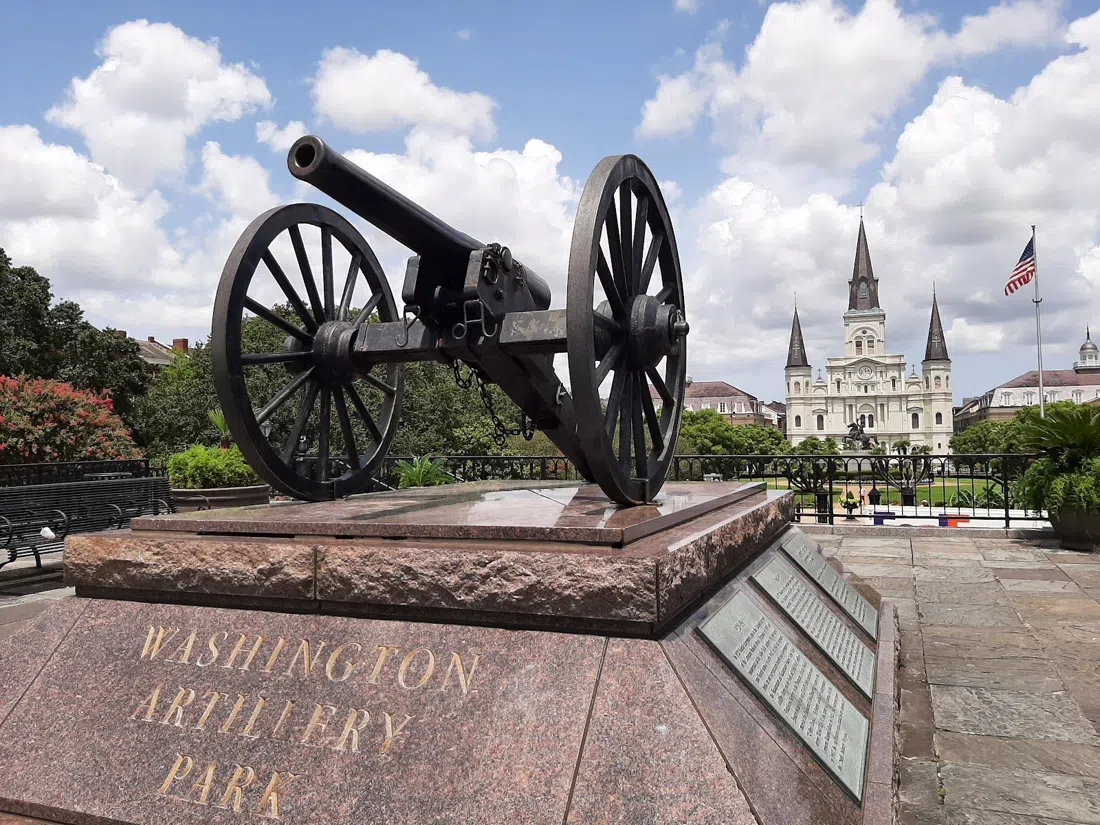
Washington Artillery Park & the Moon Walk (French Quarter riverfront) is free, unticketed and open air, and it is where every walking group stops for the same photograph: the cathedral in one direction, working river traffic in the other. Go about an hour before sunset, when the light sits behind the camera for the cathedral. It is also where you eat the muffuletta.
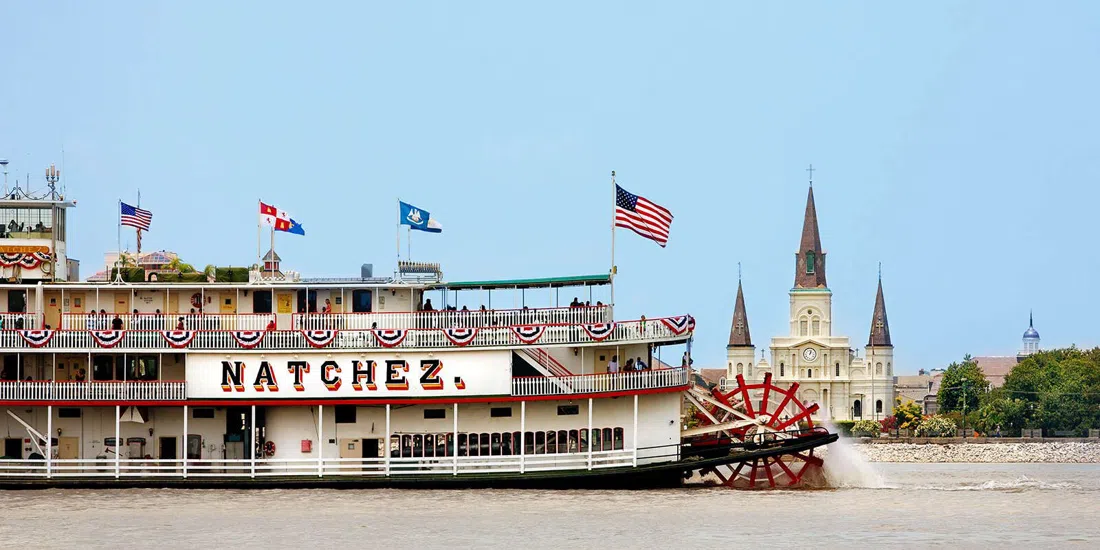
Steamboat Natchez (French Quarter, Toulouse Street Wharf, a short walk upriver) sails year-round, three times daily, and runs roughly $50 to $55 for the two-hour harbour jazz cruise, more with the Creole buffet on the evening sailing. It is built for groups, with hundreds of seats, group rates and private charters, so board 30 to 60 minutes early if you want rail or window places together. The calliope concert before the evening departure is free to anyone standing on the Moon Walk, and that is a perfectly good way to hear it.
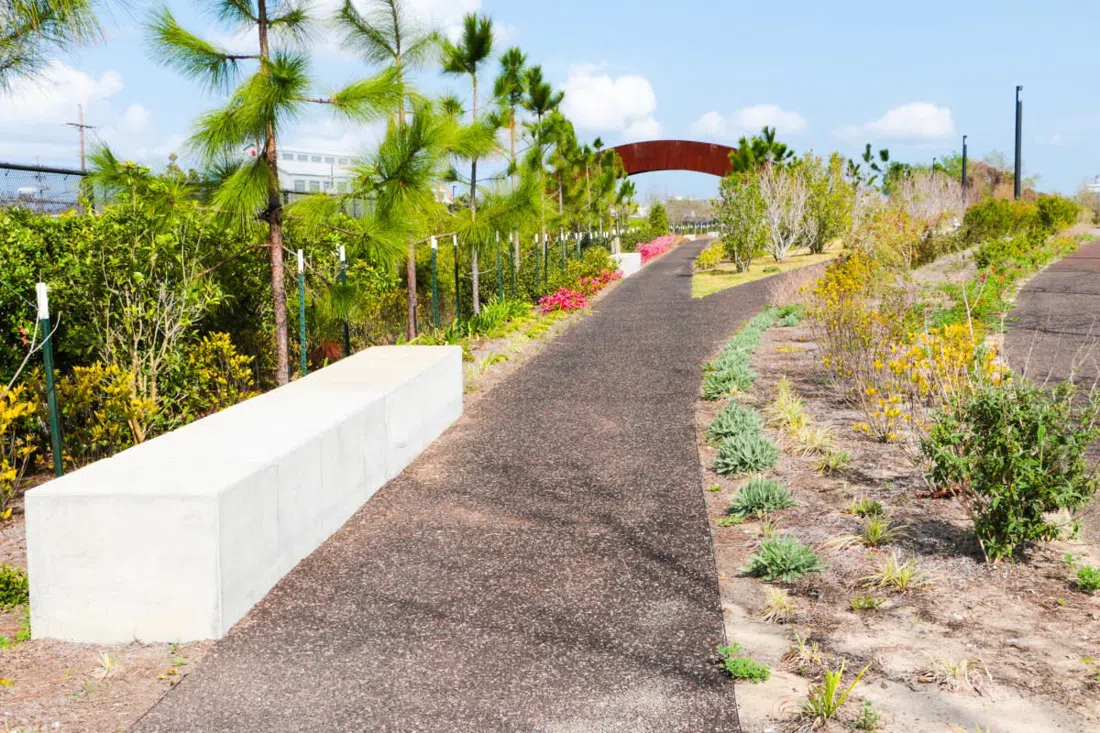
Crescent Park (Marigny riverfront) is twenty minutes' walk downriver past the Mint and the reason to keep going once the sheds close. The 'Rusty Rainbow' bridge and the stripped wharf sheds give the most unobstructed skyline-and-river view in the city. The Piety arch is stairs-plus-ramp; the Mandeville entrance lift is the reliable step-free way in. Gates run 6am to 7:30pm, so it is a daylight stop rather than a night one. For the wider picture of how these riverfront blocks connect to the rest of the city, the New Orleans guide lays out the districts.
Who it suits and whether it is worth it
Worth it as a food-and-craft walk of two to three hours, not as a shopping destination. Come for the beignets, the muffuletta, Loretta's praline-stuffed beignet and the co-op, and the market is one of the best-value mornings in the city: historic, free, and still trading rather than preserved. Come expecting a European-style covered market of producers and you will be disappointed by half of it.
It suits solo travellers and couples best, because the good food here is counter food and counters reward one or two people. Families do fine; the walk is short, flat and punctuated by sugar. Groups of ten or more need a plan: split at Café du Monde, use Aunt Sally's or Loretta's for volume, and book the Original French Market Restaurant or take the Gazebo courtyard if you want everyone sitting together. Anyone using a wheelchair should route along the sheds to the Mint, which is the step-free spine of the whole area.
Best time to go
Early. Between 7:30am and 9am the beignet queue is short, the light under the colonnade is low and flat, and the stallholders are still setting up, which is when they talk to you. The sheds themselves only open at 10am, so a perfect morning is coffee first, river wall second, stalls third.
Avoid 11am to 2pm if you can, which is when the food walks, the coach parties and the day's heat all arrive together. The next good window is 4pm to 6pm: the market is emptying, Dutch Alley is still open until 6pm, and you are perfectly placed for the Moon Walk at golden hour.
Weekdays favour the craft and the galleries; weekends favour the farmers and eateries end, which runs later and busier. In the deep summer months the middle of the day is punishing and the covered colonnade is one of the few comfortable places to stand outdoors, so shift everything earlier and plan the indoor Mint or the convent for the afternoon. In winter the market is calm and the sheds are cold in a way visitors never expect; sunset arrives early, so bring the Moon Walk stop forward.
Getting there, paying and planning
The market is a walk from anywhere in the French Quarter, ten minutes from Jackson Square, fifteen from Canal Street. The Riverfront streetcar runs along the river with a stop at the market itself, which is the easy option if you are coming from further upriver. Driving is not worth it; Quarter parking is expensive, tight and slow to leave.
Cards are taken at the sit-down places, the museums and the cruise, but carry $20 to $40 in small notes for the stalls: praline stands, flea traders and market vendors all move faster on cash, and a few will only deal that way. Everything is priced in US dollars.
A sensible budget for one person doing the market properly: $4.50 beignets, $10 to $12 half muffuletta, a few dollars for a praline, $6 for the Jazz Museum, $10 for the convent. Add $50 to $55 if you take the river cruise, or from 82 USD if you take a guided food walk instead of self-catering. Total for a full day, unguided, is comfortably under $50.
Stay in the lower French Quarter or the Marigny edge if the market is your anchor: you will be five minutes from the sheds and ten from the Frenchmen night market, and you can do the early-morning beignet run in slippers. A New Orleans hotel search will show what is within that radius.